Utah Issues
Utah 3rd Congressional District 2026 General Election Debate
Special | 56m 15sVideo has Closed Captions
Candidates for Utah's 3rd Congressional District in the 2026 General Election debate the issues.
The candidates running to represent Utah's 3rd Congressional District in the 2026 General Election answer questions about the issues facing Utah and the country. Candidates include Republican Celeste Maloy and Democrat Kent Udell. The debate is moderated by Bob Evans, Anchor of Fox 13 News.
Problems playing video? | Closed Captioning Feedback
Problems playing video? | Closed Captioning Feedback
Utah Issues is a local public television program presented by PBS Utah
Utah Issues
Utah 3rd Congressional District 2026 General Election Debate
Special | 56m 15sVideo has Closed Captions
The candidates running to represent Utah's 3rd Congressional District in the 2026 General Election answer questions about the issues facing Utah and the country. Candidates include Republican Celeste Maloy and Democrat Kent Udell. The debate is moderated by Bob Evans, Anchor of Fox 13 News.
Problems playing video? | Closed Captioning Feedback
Where to Watch Utah Issues
Utah Issues is available to stream on pbs.org and the PBS app.
More from This Collection
Candidates debate in the races for Utah's four congressional districts. Presented by PBS Utah in partnership with the Utah Debate Commission.
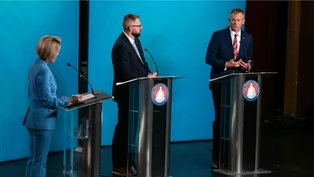
Utah 2nd Congressional District 2026 General Election Debate
Video has Closed Captions
Candidates for Utah's 2nd Congressional District in the 2026 General Election debate the issues. (56m 21s)

Utah 4th Congressional District 2026 General Election Debate
Video has Closed Captions
Candidates for Utah's 4th Congressional District in the 2026 General Election debate the issues. (56m 15s)
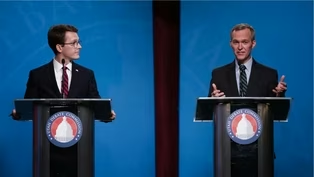
Utah 1st Congressional District 2026 General Election Debate
Video has Closed Captions
Candidates for Utah's 1st Congressional District in the 2026 General Election debate the issues. (56m 14s)
Providing Support for PBS.org
Learn Moreabout PBS online sponsorship- [Narrator] From the campus of Utah Tech University in St.
George, the Utah Debate Commission welcomes you to the general election debate for Utah's 3rd Congressional District.
(gentle music) - Welcome, everyone.
I'm Bob Evans, moderator for this exchange, and on behalf of the Utah Debate Commission, thank you for joining us.
(audience cheering and applauding) Today, we'll hear from two candidates who qualified for this debate in the race to represent Utah's 3rd Congressional District.
The candidates are Republican Celeste Maloy and Democrat Kent Udell.
We look forward to an engaging and civil discussion, with the goal of helping Utah voters make informed decisions.
Candidates will each receive one minute to answer questions, with up to 30 seconds for rebuttals, if needed, at my discretion.
A random drawing held prior to the debate determined that Candidate Maloy will get the initial response to the first question, and then we will alternate turns on the remaining questions.
Let us begin.
Candidate Maloy, Congressional District 3 is one of the most geographically and economic diverse districts.
Oh, I'm sorry.
Our first question, we do need to do opening statements.
I told you live TV is lots of fun.
Let's go to our first opening statement, and I believe, Candidate Maloy, you have the opening statement.
- Thank you.
I am standing here on this stage thinking that I'm quickly closing in on three years in Congress.
This is my third cycle of elections in three years, and so it's not my first rodeo anymore, but every time I get on one of these stages, I'm overwhelmed at just how grateful I am that I get to be here doing this.
I'm excited to stand here and answer questions and have a civil debate, and make sure that the voters in Utah's new third congressional district are informed, because that's part of what makes our country so great, that we have a government that answers to the people and the people get to hear us answer questions, they get to ask us questions, they get to vet us.
And I'm as thrilled to be part of that now as I was three years ago, when I had an improbable bursting into the political scene.
And I just hope that we have a great debate tonight and that everybody leaves here knowing more about me and my opponent, and how this country works and what the future's like.
Thank you.
- Thank you.
Candidate Udell, your opening statement please.
- We are living in a moment of real crisis, a crisis of truth, a crisis of accountability, a crisis of affordability, a crisis of climate and water, and a crisis where so many people that I've talked to feel that the system is rigged against them, and they're not wrong.
We see wealth flowing up, not down.
We see division being manufactured and amplified for political and financial gain.
We see leaders who would rather stoke fear and hate to then to solve the real problems that are facing our country.
And in moments like this, we all have a choice: either step up or step back.
I am here because I have decided to step up and I'm asking you, the voters, to step up with me.
- Thank you for your opening statement.
Now, candidate Udell, Congressional District 3 is one of the most geographically and economic diverse districts in Utah.
A farmer in Eastern Utah, family in St.
George, a tourism business in Moab, and an energy worker in Emory County can have very different interests.
When two communities in District 3 want contradictory things from the federal government, what process would you use to decide whose interests to support?
- It is indeed a very diverse community.
People in Park City, you have people in Green River.
What I always go to is that everybody that I talk to has a love for this country, and if I start with talking about love and starting to talk about what we love about this country, we can always find common ground.
We go back to the basics.
We go back to the principles.
We go back to the principles of supporting the Constitution, supporting the rule of law, supporting the Bill of Rights.
We get to that point and start talking there, we can make progress, we collaborate.
We always find that we do better if we cooperate than if we're in competition.
- [Bob] Candidate Maloy.
- It is a very diverse district.
It's geographically really large.
I've spent a lot of time driving around it lately.
I can verify that it covers a lot of country and there are a lot of people with different backgrounds in the new 3rd District, but generally, if we're enacting good policy, good policy works really well in St.
George and in rural Emory County.
When there's a conflict, I like to go back to principle.
So there are three filters that I put my votes through.
Is it constitutional?
Does it make Americans more free?
And is it good for the people of Utah's now 3rd Congressional District?
And so when there's a conflict between different parts of the district, which I don't anticipate happening a lot, I'll go back to those principles.
Which thing jives the best with the constitution?
Which thing makes Americans most free?
And which thing is best for the people in the 3rd District?
And that's what it means to represent.
Sometimes, you have to make difficult decisions on behalf of the people you represent, and then come explain your decision and make sure they understand where you're coming from.
- Anything you want to add there, candidate Udell?
- I agree with most of what she has to say.
I believe that people in this district, no matter where they live, whether that is Carbon County or whether that is St.
George, we all have common interests and want to see this country be better.
And if we can cooperate, if we can work together, we can make things happen.
But it takes people that are willing to stand with truth and to stand with the basic principles, and so I agree.
- All right, redistricting has been a really contentious issue here in Utah with legislators, the courts, and others voicing various opinions.
Do you believe the boundaries you alluded to, Candidate Maloy, do you believe the new boundaries are fair, equitable, and competitive?
- I believe that the process through which government does its work really matters, and the process of drawing these maps didn't include public comment, it didn't go back to the state legislature, the people who are elected to represent the people of Utah, so I think we could have gotten a better outcome if we'd have followed the process that we're supposed to follow when we get new maps, which is that the state legislature draws maps that are representative of the state of Utah.
I, however, do not get a say in that process, and so running in the district I live in, based on the boundaries that are law right now, I would have liked to have seen the process be followed the way it's written in law.
- [Bob] Candidate Udell.
Well, the district as drawn is the legal process through referendum.
This is what the people wanted to be able to get districts that represent the people.
The interests of the people in Salt Lake City and Salt Lake County are different than the people in Emory County or in Vernal.
I believe that the representative should represent the entire district.
When I saw this first district, I fell in love.
This is my land.
These are my people.
These are the lands I love.
These are the waters I love.
These are the people I grew up with.
What did my opponent do?
She sued so that she could keep the boundaries as they were before so she could keep her seat.
I will work for the people in this country because these are the people and the lands and the rivers that I love.
- [Bob] Candidate Maloy, you have 30 seconds.
- Well, it's a bold claim that the people of Utah like these district boundaries because the people never got a chance to weigh in on them.
They were selected in a lawsuit.
So I did sue, with a bunch of elected officials from around this district, to try to go back to the right process and make sure the people of Utah had a voice.
But this is a cool district.
It's got all five of the mighty five national parks.
It's got most of the energy production in Utah, all of Lake Powell, and I'm excited to represent the new 3rd District.
- All right, Candidate Udell, this question is for you and it's on the economy.
The cost of living, including gas and food prices, remains a major concern for voters with constituents paying record or near-record prices for many items.
What specific policies would you support that would help alleviate these high prices and inflation in general?
- As I said, we feel that the system is rigged against us, that the money is coming from our pockets to the pockets of the large corporations and the billionaires.
There's a lot of gouging that is going on.
If we look at what happened after COVID, they said the prices are going up because the supply chain has been disrupted.
Well, they reestablished those supply chains.
Did the prices go down?
No, they didn't have to because they had that built in, and what we're seeing now are the results of that.
So we look at energy, we look at food, we look at affordability, all of those issues, energy, all of those things, you can trace back to the affordability issue of that money going up and not coming back down to support the people that are doing the hard work in this district.
- [Bob] All right.
- I agree that Utahans should keep as much of their own money in their own pockets as possible.
That's why I voted for making the tax cuts permanent from 2017.
It's why I voted to reduce taxes on tips, overtime, Social Security, to increase the Child Tax Credit.
All of these things are good for Utah's families.
I listened to one of my colleagues tell a story the other day that she talked to a single mom who works for tips, and because of the tax changes, she was able to put one of her kids in braces and another one in private school.
Those are the kind of things that help keep money in Utahan's pockets.
And on the bright side, I do spend a lot of time driving around this state and I drive a diesel.
I know fuel prices are too high, but between last week and this week, I watched the prices of one specific Maverick I stop at a lot, go from 6.68 to 5.99 today.
So it's still high, but it's coming down and I'm excited to see it going in the right direction because I think that'll help people feel some of these other improvements more when fuel prices get lower.
- [Bob] All right.
Do you have a rebuttal with that?
- Yes, I do.
You look at where that increase in the amount that we're paying for energy and healthcare, you see that that is money that is going into the pockets of the oil industry and into the food industry and into the healthcare industry.
That's the problem, and that is where we need to be taking some stand and working to get rid of this corruption and get rid of this gouging that we keep seeing over and over again.
- All right, we are here on the campus of Utah Tech University, and we have Haley Phillips, who is a student of humanities, philosophy, and religious studies, and she is going to pose the next question and to, I believe, Candidate Maloy.
- Thank you.
Along those lines, many of my generation are concerned with current economic trends and the affordability crisis that is pushing many of us out of financial security.
This is especially concerning with AI threatening many of the jobs available to us.
If you are elected, what policies would you support to create higher paying, substantial jobs for the rising generations?
- Thank you for being here and thank you for asking a question.
I'm always excited to see people your age engaging on anything elections, and I hear all of the same concerns you're hearing about people your age.
Will you have jobs?
Will you be able to afford to live in this country?
And I think your future is very bright.
I am just the right age to have been in college when people were starting to say, "Is it worth studying accounting because people are starting to have laptops and they have spreadsheets on them, and will people need accountants?"
And accountants still have jobs.
They spend a lot less time sharpening pencils.
And I have faith in your generation that you're going to learn to use AI, to harness the power of AI and turn that into family-sustaining jobs for yourselves into the future where you might be doing less busy work because AI is doing some of that, but you're going to be the human intelligence behind the machines, and you're going to have a bright and beautiful future in this country.
Don't believe all the doom and gloom.
People who are selling you that you don't have a future, they have their own agenda.
Don't buy it.
Just go out, face the world fearlessly, and create a beautiful future.
- [Bob] Candidate Udell.
- Well, as a philosophy major, maybe you would understand these two questions.
First question is, where is the knowledge and information, and where is the wisdom in knowledge?
That's a dividing line that I'm seeing right now in terms of AI.
AI is gonna get us great knowledge.
It's gonna be wonderful to be able to connect like we have been on our telephones.
And "Hey, Siri, what is the rainfall in Nicaragua?"
You get that information, but what it does not give you is wisdom, and I think what's gonna be important for our next generation is that they feel that what they learn and the wisdom that they are gaining from everyday experiences and failures and successes, that's what's gonna be driving our future of AI.
So I say keep focused on the experience and the wisdom.
Get the experiences that allow you to be able to make the right decisions in this AI world.
- Haley, thank you for your question.
This next question has to do with housing, and it is directed to you, candidate Udell.
Recent polling shows housing a top concern with Utahans.
Utah's housing market remains one of the most expensive in the nation and interest rates were raised recently.
As a member of Congress, what federal policies could help ease the strain on new buyers?
- That's an interesting question with respect to the diversity of populations.
What would work in Orem or Provo is different than the needs of somebody that was living in Green River.
I support Governor Cox's idea of starter homes, because I know that so many people in this state just want to be able to buy a home and start a family and raise their kids in a safe environment.
So I love the idea of starter homes, finding ways of getting state, municipal, and federal grants to be able to build these starter homes.
We need to get people out of the basement and into their homes.
- [Bob] Okay, Candidate Maloy.
- I also love the idea of starter homes, and that's why I supported the 21st Century Road to Housing Act.
It's actually passed in Congress and focused on making the inputs to housing less costly and cutting a lot of the red tape that drives up the cost of housing.
If you talk to people in this area, which is quickly growing, a lot of the regulation makes the cost of housing higher.
We tried to address that, and in fact, I am the Republican co-chair of the Build America Caucus, and when that bill got caught up on a technicality, an unintended consequence, a clause in the bill that would've made it more difficult to build rental properties, we helped pave the way to finding a solution to that to be able to move that bill through the House and the Senate and get it signed into law.
It is law now, and I'm excited to see some of these improvements that we've made help bring down the cost of housing.
- We're gonna go to a question now that has been a perennial question for many, many years, and it has to do with Social Security.
Roughly one in seven citizens in Utah's 3rd Congressional district receives Social Security benefits, one in seven, yet experts tell us if major changes are not made, this program will become insolvent.
What specific changes would you support to ensure Social Security survives and thrives, Ms.
Maloy.
- So this is one of those ones we talk about it all the time.
We have to keep the promises to people who are already on Social Security.
We told people if they paid into the system, the system would be here when they retired, and we have a lot of people who are already retired, so we've got to keep those promises and look down the road with clear eyes and be willing to try things we haven't tried before to make sure that it's solvent for future generations who are not about to retire.
I'm in my 40s.
I have assumed all of my adult working life that Social Security would not be solvent by the time I am Social Security age.
I think that's true of a lot of my peers and a lot of people who are younger than me, and so I think we're willing to take steps that nobody's taken before.
I think we're willing to look at novel ideas that haven't been tried and find ways to keep it solvent instead of just kicking the can down the road and pretend that it's all going to be fine.
- [Bob] Okay, Candidate Udell.
- It's simple: first thing you do is you raise the cap on Social Security, on wages for Social Security, number one.
Number two, you get money into the pockets of the people that are actually doing the work so that they have the payment into their programs.
Social Security is absolutely fundamental to the welfare of the people that are aging in this country, especially as we're seeing inflation, the cost of food, the cost of energy going up.
We have to maintain that system.
If not, we're going to see a disaster in this country.
I've heard Representative Maloy say, "We need to raise the retirement age," and let me tell you, my brothers and brother-in-laws worked hard construction jobs.
By the time they were 60, they were worn out, and to push them to be pushing their retirement age farther is just not right.
We need to make sure that we keep Social Security coming and not force people to work past the point where their bodies can't take it.
- [Bob] Candidate Maloy.
- Yeah, I just want to say I agree with the statement that we need to make sure the people who are working keep more of their own money, which is why I voted for the tax cuts I talked about earlier, but specifically, people who are already on Social Security got a tax cut.
We did no tax on Social Security.
80% of the people who are currently on Social Security no longer pay any taxes on it, and that's a tangible improvement that people are already seeing.
- Okay, Mr.
Udell, the national debt now exceeds $40 trillion.
It's hard to even get your head around.
About $286,000 per taxpayer is what we owe, and Congress faces growing demands for spending on defense, Social Security, Medicare, infrastructure, and interest payments on the national debt.
What specific federal spending reductions, entitlement reforms, or tax policy changes would you support to improve the nation's financial health, and what programs would you be willing to protect or exempt from cuts?
- Well, Social Security is self-funded.
That is not adding to the national debt.
It's putting us in a difficult position, but it is not adding to the national debt.
The national debt comes from the Big Beautiful Bill, and that is what our opponent voted for.
It gives tax breaks to the rich, and it is driving up our federal deficit to an incredibly high level, and that deficit creates higher interest rates, which we all are paying.
So what are we doing?
We're giving tax cuts to the rich and everybody else is paying for it.
We're paying for it in terms of our loss in healthcare.
We're paying for it in terms of increased interest rates.
I don't think we need to be shy about looking at the national defense budget.
Over 60% of our budget for national defense is unaccounted for.
Eisenhower warned us about this, the industrial military complex, that is what's driving in part our military budgets up.
- [Bob] Candidate Maloy, where would you cut and where would you preserve?
- Well, I'll tell you what I've already done, and I would not start with getting rid of tax cuts for Utah families, but no tax on tips, no tax on overtime.
I don't know any rich people who work for tips or get paid overtime.
I'm on the Appropriations Committee, and that's where we make the spending decisions on discretionary spending.
Last year, we did a year-over-year cut in discretionary spending.
A lot of it came from the National Security Bill.
It used to be called SPOPS.
That's the one a lot of people here talk to me about, where they say, "Why are we sending money to foreign countries?"
A lot of that got cut back.
And so we cut our overall spending.
In fact, last year, we changed the debt-to-GDP ratio to make it smaller for the first time in about 30 years.
We also passed 11 of our 12 appropriations bills last year.
That's where those discretionary spending cuts are.
That's only happened four times since 1960.
So we're taking this seriously.
We're taking this on.
It's not a one-year fix, but we're doing the hard work that's required to make sure we're tackling that debt, and then the deficit can come down.
- Candidate Udell, do you have a rebuttal?
- The national debt has increased dramatically over the past two years, and it is a result of the Big Beautiful Bill and the tax cuts for the ultra wealthy.
We need to have tax reform across the board.
People on the top end, they need to be paying their fair share.
They have more money than they could possibly spend.
Why is it that they are so greedy that they will not share that with a country where they live?
- All right, Candidate Maloy, you are next for this question in regard to growth.
Rapid growth in places such as Washington County, Utah County, and the Wasatch Back have created high demand for roads, water, infrastructure, schools, housing, and energy.
How much should those costs be borne by new development, local taxpayers, the state, and federal government?
- That's a great question, and it's one that we're always grappling with, who should pay for the new growth?
A lot of this is a state-level and a local debate.
We have federal grants, federal programs to fund infrastructure, and again, I'm the Republican chair of the Build America Caucus, which is bipartisan, and we just rolled out our plans for next Congress, and a lot of it is how do we make infrastructure costs come down?
How do we get rid of the federal impediments to infrastructure?
A lot of it is regulation, duplicative regulation and red tape that make projects take more time, time costs money, and every hoop that somebody has to go through to build an infrastructure project makes it more expensive.
And with infrastructure especially, it's usually local governments.
So a state or a local government is using taxpayer dollars to jump through federal hoops that are costing taxpayer dollars.
So we're trying to streamline that and make sure that every dollar that we do appropriate to infrastructure goes farther and puts more asphalt on the road or puts more bridges up instead of just being an exercise in government laundry washing.
- Mr.
Udell.
- Infrastructure is a combination between state, county, and federal investment.
We do pay a fair amount of tax on fuel.
We also pay a huge amount of money in county taxes, and what are those taxes going for?
My taxes doubled in one year.
What is that money going for, if not for infrastructure, if not for the infrastructure that is supporting the people that live in those districts?
There is money available, but why is it not being spent in an appropriate way?
And it's not a federal issue exactly.
It is a federal need to help when we can, but it is up to the municipalities and up to the counties to be able to provide that infrastructure and the taxes on that infrastructure, on that land should be paying for it.
- Let's talk about data centers, and this question is to you, Mr.
Udell.
While new data centers can bring investment and jobs to Utah, they can also require large amounts of electricity, water, and infrastructure.
Should Congress establish federal standards for large data centers, or should decisions be left primarily to the states and local governments?
- There should be regulations on data centers.
I look at data centers and I see billionaires that are playing "Minecraft" on how they're putting these things together.
They say, "Well, data center, I got a power plant here.
I've got a data center here, and wah, it looks like it's done."
They can't do that.
Now, is that a federal issue or is that a local issue?
Well, it's clearly a local issue.
I was in Box Elder County looking at what our commissioners did in terms of just overriding any public input.
And at that point, I said, "That's it.
I call for a moratorium on new data centers."
In Utah, we understand what it's like to be driving on slick roads.
This is a slippery slope we're going on, and we know, as Utahans, that if we hit a slippery slope, we pump the brakes.
We don't hit an accelerator.
- [Bob] All right, Candidate Maloy.
- I think this is very much a state and local issue.
State and local governments are better suited to make these decisions based on the resources and the local needs than the federal government is.
And I'll give you an example.
Just today, I was talking to a state senator from Utah who pointed out to me that the state of Utah saw a lot of this coming and passed a bill that requires a data center that wants to come into Utah to not only not harm the rate payers when it comes to electricity costs, but they have to add more electricity to the grid.
So that's something that the state has already come up with a solution for that fits Utah.
We have some of the lowest electricity rates in the country in Utah, and they're trying to keep it that way.
If we came in from the federal government and said, "This is the regulation that will solve this problem for everybody in the country," that might not fit Utah.
Sometimes, one size fits all doesn't actually fit anybody, but our state legislature and our county commissioners and our city councils are best suited to know what resources match their needs in their area.
- We have now reached the halfway point of the debate featuring candidates in the race to represent Utah's 3rd Congressional District.
If you're just joining us, I'm Bob Evans, moderator for this presentation of the Utah Debate Commission.
We're coming to you from the Eccles Fine Arts Center at Utah Tech University in St.
George.
Let's go back to the questions now.
Let's talk energy.
Well, and this question is to you, Ms.
Maloy, while Utah needs reliable, affordable electricity, new energy development can create environmental and public health impacts.
What mix of fossil fuels, nuclear power, and renewable energy should Utah pursue?
And what environmental costs are you willing to accept in the name of lower energy prices?
- Well, I think it's a little bit of a false dichotomy to say what environmental costs are we willing to accept.
We actually produce really clean energy in this country.
I think we should have whatever mix the market is asking for.
Right now, we produce a lot of oil and gas in Utah, and those provide good, family-sustaining jobs in rural Utah, and that's a beautiful thing.
We're also on the razor's edge on the tip of the spear with geothermal energy in Utah, and the technologies we're developing here in this state are things we can export to other places that don't have the low power costs we have, that have more energy constraints than we do, more resource constraints than we do.
So I love that we are developing these technologies that can help other places.
We're also innovating when it comes to nuclear energy, and that is probably the future of energy.
We should be on the front end of that.
So as the market demands these power sources, we should be helping develop them in the way that is the least environmentally costly, and we actually are really good at doing it without harming the environment.
- [Bob] Mr.
Udell.
- Nuclear power is the most expensive way that we produce power in this country.
We have better options.
We have wind and we have solar.
We have wind and solar that doesn't use water.
Nuclear energy, nuclear power requires water for cooling to make it economical.
So why are we paying so much for nuclear?
And why are they pushing so hard for nuclear?
And why are they pushing so hard for these small nuclear reactors when there has not been a single one built that has been shown to be able to produce power economically?
So who is pushing this?
Who is pushing this?
Well, it seems like it is a bunch of entrepreneurs that are keeping the prices of their stocks up.
This is not a clear return on investment that has been shown for this country.
It may be, instead of ROI, it might be ROM, risk other people's money.
This may be a stock play to be able to get the investment so that the people that got in early can get out before people realize that this is a bad direction to go.
- Yeah, I would just like to rebut by saying, generally, when entrepreneurs are investing in something, it's because they have financiers who think that it's going to pay off.
I think that's actually a really good way of deciding which energy sources are going to be the energy of the future, and the reason to develop nuclear is because it's reliable, it's base load, it's dispatchable.
It's going to be the energy source of the future that doesn't disappear, that isn't controversial.
It's going to power the AI future that we are going to have.
AI's here.
We're going to be using it.
We have to have the power to power it.
- I've sat in on presentations for Valor Nuclear Energy.
I felt like I was sitting in a timeshare presentation.
They hadn't built one.
They haven't even designed one.
They can't show that I'm going to get my money back.
I feel kind of slimy coming out of that.
I'm an energy engineer.
I understand nuclear power.
I understand what it takes to be running these processes.
It will take a lot of water.
We have not shown that they're safe and it has not shown that it's economical.
And I don't want you to be holding the bill on a boondoggle on these nuclear power plants.
- I'm tempted to keep going on this, but we have just a limited amount of time and many subjects to get to.
We've been talking about water and the use of water.
Let's talk about that some more.
Utah is growing in population, and this is to you, Mr.
Udell, Utah's growing in population and economic development.
However, the Colorado River and other water sources face long-term problems and constraints.
What specific federal policies would you support to allow communities in District 3 to grow without committing Utah to using more water than it can sustainably provide?
Is there development that should be limited because of a lack of water?
- Water is life.
We need to set our priorities.
We need to make sure that the farmers get the water that they need and we need to make sure that the homes get the clean water that they deserve.
Those are the priorities.
We're upstream on the Colorado River.
The fact is that because of global warming, the trend is that we're gonna be seeing more droughts, we're gonna be seeing less snow pack, we're gonna be seeing more stress on our water systems.
There are things that we can be doing.
One, I would want the USGS to do a comprehensive analysis of the groundwater that we have available, because when our streams run dry, that is our battery.
We need to know what it looks like.
We need to address Glen Canyon Dam and Lake Powell.
It's about to hit deadpool.
Maybe we'll get a little bit of a bump from El Nino, but there's no guarantee and the long-term trend is clear.
We've got to address what we're gonna be doing in Lake Powell and how we're gonna retrofit Glen Canyon Dam so that we can get that secure and to be able to meet our requirements of what we're committed by law to be sending downstream, and at the same time, keeping the water we need upstream.
- [Bob] All right, Candidate Maloy.
- Well, I do agree that we have to protect Utah's homes and our agricultural producers.
I have been working with my colleagues on innovative ways to address some of these water shortages.
I know abundance is kind of a buzzword right now, but I think we need to get out of the scarcity mindset when it comes to water.
We have this paradigm that we all live in where states are fighting each other over these drops of water that have diminished over the last couple of decades, and I think it's time to start looking at new technologies, new innovations, how can we make this water go farther and how can we put new drops of water into the system?
We've seen with the Colorado River negotiations that sometimes states can't come to agreements.
Generally, I'm in favor of the federal government staying out of it and letting states manage their water because states have jurisdiction over water.
When it comes to interstate agreements, sometimes we might need to have federal help and maybe even federal investment in the future of the West because we have a thriving economy in the West that does require water.
It is our scarcest resource and it does have to be a top priority.
- And that leads us to, and you're alluding to this very next question, which is the federal government is temporarily operating the Colorado River system while the seven states along the river continue to negotiate their respective roles and water rights.
Should the historic Colorado River Compact continue to be renegotiated by the states or should the federal government permanently retain control of the Colorado River, Ms.
Maloy?
- States should maintain jurisdiction over their water.
Having the states continue to negotiate is the right answer.
The Bureau of Reclamation stepped in and put out an EIS, basically, environmental impact statement.
It basically says to follow the law of the river, and I think it was to create an incentive for the states to keep working and keep coming to an agreement.
Sometimes, states have perverse incentives because it is a zero-sum game.
There's only so much water in the river.
There are seven states that split it, and for every drop that goes to one state, another state feels robbed, and that's why I think it's time to innovate with technology and fix some of those paradigms, but it should always be the states in charge of their own water.
I don't think the federal government should permanently be running the Colorado River, and I don't think the federal government should be stepping on state jurisdiction.
And if you're a Utahan, this is a easy math problem to explain.
The six states that are not California combined don't have anywhere near the number of votes in Congress that California has.
So if it comes down to a vote in Congress, it's probably not going to be an equitable solution like seven sovereign states would come up with.
- [Bob] Mr.
Udell.
- You can't regulate the laws of nature.
We're seeing increasing temperatures and that is ending up with climate chaos, including droughts and including thunderstorms and including the lack of snow pack in our mountains.
That is the problem.
And the other problem is that we have promised more water going downstream the Colorado River than is coming in.
And I don't see that that is gonna change long term any time soon.
So yes, we have to deal with that issue.
We have to deal with the climate change issue if we are going to get a handle on our water situation.
So I have ideas about how we're to go about doing that, things that would be fair, things that would be effective, things that would engage our energy engineers to be able to deal with this issue, and part of it is the amount of water that we're using in terms of producing the power in this country.
- Again, we are coming to you from the campus of Utah Tech University in St.
George, and we have another student with us, Tanner Azdoba.
He is a history and political science student.
And you have a question.
Go ahead, Tanner.
- Thank you.
Good evening.
Under recent presidential administrations, the boundaries of Bears Ears National Monument have changed repeatedly.
These frequent changes have created uncertainty for communities within this congressional district.
If elected or reelected, what role would you encourage Congress to take in determining the long-term boundaries of Bears Ears National Monument and the other monuments within the 3rd Congressional District?
- [Bob] Mr.
Udell.
- The boundaries that were established and in place a year ago worked out great.
It respected the local communities, the tribal lands, the tribal communities.
We had a great management plan in place.
And to throw that out the window, to disrupt our tourist industry, to disrupt our system for what?
A handful of sagebrush rebels and mining companies?
No, that's public land and that needs to be protected for everybody.
And no, that should have not been changed, and in Congress, I will work to get those boundaries reestablished by law so that it's no willy-nilly executive decision say, "Oh, we don't like this."
I don't even think that that is legal.
I don't think it's legal to decrease, and there are lawsuits out there that are challenging it.
It's legal to expand them, but it's not clear that it's a legal issue that you can cut them.
- Ms.
Maloy.
- Well, I was standing in the Oval Office when the announcement was made about reducing the monument boundaries, so obviously, I support that decision.
It was made by listening to elected officials from Utah.
That's why I support the decision, but to your larger question of who should be making these boundary decisions, both the Grand Staircase Escalante National Monument and the Bears Ears National Monument are in the new 3rd District.
Those are probably the two most controversial national monuments in the country, and the reason is because, again, process matters.
Both of them were created over the protest of Utah's elected officials.
The people who speak for our friends and neighbors here in Utah were ignored and they were unilateral decisions.
So I do agree with my opponent that these shouldn't be made unilaterally, so I introduced a bill that would amend the Antiquities Act to take out Section 2.
Section 2 is where Congress gave presidents the authority to make national monuments.
We should just rescind it because Congress should be making those decisions.
And when Congress declares a national monument, like Cedar Breaks, they tend to be uncontroversial.
- [Bob] Mr.
Udell.
- You stand behind President Trump as he was saying, "You can't hike on these lands, you can't camp on these lands, you can't fish on these lands," and that was a lie and you knew it.
And you stood there and smiled and said, "Yes, that's what we want to be doing."
No, it's a question of integrity, it's a question of honesty, and it's a question of standing up for the 80% of the people in this country that did not want those reduced.
That's who owns that land, that's what we need to respect.
- [Bob] Ms.
Maloy, go ahead.
- I think my actual quote was that I hope the press would notice all of the elected officials from Utah who are standing there with the president and supporting that action, but as far as the access goes, I have worked on the Grand Staircase Escalante National Monument and its management for over 20 years.
It turned 30 last month.
And when President Clinton stood on the north rim of the Grand Canyon and created a monument in Utah, he promised that all the traditional uses would continue, but through management decisions over time, they have been restricted, and that's one of the reasons I think Congress should make these decisions.
- This next question, we're still on federal lands here.
District 3 contains a large amount of federal land, including some of Utah's most important national parks and monuments that we've been talking about.
Do you think, Ms.
Maloy, governing authority for public lands should remain with the federal government or should some authority be transferred to Utah or local governments?
And if so, how do you make that distinction?
- So generally speaking, I think the people who live closest to the land are in the best position to make decisions about how it should be managed.
If any of you get my weekly newsletter, you will have seen that, this week, my video is about public lands and how not all of the land in Utah is the same.
We have Bureau of Land Management land, we have Forest Service land, we have parks, we have monuments, which some of them are Bureau of Land Management land, and then we have military installations and Fish and Wildlife.
Each of them has a mandate from Congress for how they should be managing that land.
The very least we can do for the people of Utah is make sure we're holding those agencies accountable and making sure they are managing the land in accordance with the directions that Congress gave them.
Sometimes, that alone gives Utahans a lot more access.
I'm in favor of whatever answer gives Utahans the most say in how this land's managed and make sure we're having the most access and the most uses that benefit the people of Utah.
- Mr.
Udell.
- Utah is not for sale.
Our lands are not for sale.
Our public lands, our federal lands are not for sale and they are not to be taken over by a state government.
I support property rights.
I support individual rights for their property.
I support municipal rights to manage their properties.
I support Indigenous people to have sovereignty over their land, and I am absolutely sure that we need to maintain these federal lands under federal control.
I do not want to see one square inch of that land being sold or to be taken away from federal and from public use.
It is okay to be using multiple use, but that multiple use should be done to support the economy, but it should not end up decreasing and hurting the future use of that land for future generations.
And when I look at what the Utah delegation wants to be doing, I don't see them protecting these lands the way that they're being protected right now.
- [Bob] Ms.
Maloy.
- I do have a rebuttal.
We have so much federal land in Utah.
About two thirds of our state is federally managed, which means when our local governments are trying to fix roads or put in a new power line or provide some of the things we've talked about, the infrastructure we've talked about that's so important, the power that's so important to people in Utah, they're always crossing federal land.
I am okay with square inches of federal land being turned over to state and local governments when they're necessary for transportation, for infrastructure, for quality of life in Utah, we do not have room to grow.
- All right.
Let's move on.
Mr.
Udell, many rural communities in District 3 want jobs and economic growth, but have limited tax bases and infrastructure.
What is the single most important federal investment or policy change you would pursue for rural Utah, and how would you measure whether it's actually working?
- We need to get money into the hands of people that are building things, period.
We need to get money into the workers, the people that are building the things that are gonna be important for the future of our economy and the future of our state.
So we need to find ways of getting that money to get the training of the workforce and the training to be able to take on those chores on their own.
I would love the idea of seeing a Youth Service Corps where people that are not going to college, people that are not going in the military, people that are not going on missions have another pathway to learn, to learn trades, and to be able to learn how to be not only productive, but also self-sufficient when it comes to maintaining and building their own sweat equity homes.
So yes, we need to get people out of the basement and into the workforce to be building, building, building.
- [Bob] Ms.
Maloy.
- Well, I find that we agree on the building part.
I hope all of the policies that we're putting in place are good for rural Utah, but particularly, we need jobs in rural Utah.
And a lot of those jobs right now are in mining, oil and gas production, and even nuclear energy, things that my opponent just said he doesn't care about.
I want to do regulatory reform and make sure that we are removing federal barriers to bringing those jobs to rural Utah.
I've talked to people in the basin who have the training, they have the know-how, they just need the federal red tape out of the way so that they can be out producing the energy we need in this country.
I've talked to people who are doing nuclear power.
They're sitting on go.
They're ready.
They just need permitting to work faster.
I work with farmers and ranchers all of the time in rural Utah that need federal impediments out of the way for them to be able to continue their family traditions and put beef on their family's table.
That's what we should be doing for rural Utah.
That's my number one investment in rural Utah.
- I care about nuclear energy.
I think it's got a place.
Carbon-free power, that's great.
But we don't jump into that without having it proven that it is going to work and it is going to be safe and it is going to be decreasing our energy costs.
And until that is proven, I am not in favor of it.
Just hold back and make sure that we're not being forced into buying a timeshare that we don't want.
- All right, we just came from a devastating wildfire season again here in Utah.
The communities that were impacted by that are reeling.
We have seen wildfires devastating in the 3rd District this year.
What changes in forest management and public lands need to happen to help mitigate the losses that we have seen, Ms.
Maloy?
- I'm glad you asked.
I've been preaching this everywhere I can get a pulpit for the last few months.
We need to manage our forests like they are an asset to the United States of America.
We have raw materials sitting out on our mountains that are not being turned into anything useful.
We have sawmill operators who would love to go cut timber, reduce the fuels on our mountains, and turn that timber into a product, which is another thing that creates jobs in rural Utah.
It stabilizes these economies in really small towns.
Instead, what we have is management that keeps the fuel sitting there as it gets dry, as it gets old.
We have beetle kill areas.
We have smaller diameter timber than some of our northwestern sister states, and when we get a lightning strike or a campfire or some start to a fire, those things burn off, and then we have monsoonal rains that cause floods.
And in the end, we end up with a huge infrastructure problem, a huge mess and catastrophic disruption in people's lives when what we could have done on the front end is manage those fuels and create an economy and create jobs instead of creating poverty with the outcomes.
- Mr.
Udell, you're anxious to answer this question.
- You're right.
If we cut down all the forests, we won't have any forest fires.
Great idea.
That's not the way that we need to manage them.
There are management operations scientists that are out there telling us two things: forest fires are good in a limited way, and the other people are saying we need to be managing those responsibly.
Yes, some selective logging may be a part of it, opens up some grazing, but no, we can't just say we're going to cut them all down and that's going to get rid of our forest fires.
- I am not in favor of cutting down every tree on the forest, but what we have done is not cut down any trees, not reduce the fuels, and then let fire burn it all down so that we don't have a forest and then we get floods.
I'd rather see us making good ecological decisions.
We've passed the Fix Our Forest Act out of the House.
It was written by a forester.
The chairman of the House Natural Resources Committee has a master's degree in forestry from Yale, it's not too shabby, and this is his brainchild for how we can manage the forest to make them healthy and sustainable long-term without having to have this catastrophic cycle that we're in right now.
- Sadly, we have reached the end.
I know we want to keep going on this, but we have reached the end of the debate.
We're running out of time.
Each candidate will now receive one minute to share a closing statement.
A random drawing held earlier determined that Candidate Maloy will go first.
- I want to end on a similar note to where I started.
I'm still thrilled that I get to be here.
Representing people is something that I don't take lightly.
I know that you all don't get to go down to the house floor and put your card in and vote on every bill that comes to Congress.
It's my responsibility to do that for you, and that's why I'm honored to stand here on the stage and answer questions.
But I also am hearing from a lot of young people who feel like they don't have a bright future, or at least they're worried that they don't have a bright future.
And I think part of my job also as a representative is to make sure I'm bringing back the good news.
It's easy to get caught up in a cycle of this is broken and that's broken and the sky's falling and we're all doomed.
I don't think we're doomed.
I think we have at least 250 more years in us in this country.
Look at how far we've come since 1776.
I'm excited to see how far we go in the next 250 years, and I am honored and humbled to be somebody who gets to go be part of setting the stage for those successes and making sure we have policy in place that ensures a bright future for our young people.
- [Bob] Mr.
Udell, your closing statement.
- I was born and raised, educated in Utah.
My roots go deep in this state.
My great-grandfather, Levi Stewart, founded Knab.
My other great-grandfather, Jacob Hamblin, founded Santa Clara.
Another great-grandfather, David King Udell, founded Townsend, Arizona.
And I listen, and I read what my great-grandfather, David King Udell, wrote in his letter to his children 100 years ago.
"You are living in a new age with frontiers to explore, with divides to cross, and deserts to subdue.
Most importantly, you will have challenges of family and state to solve that will test the pioneer blood that runs in your veins."
That is my legacy.
That's what I'm bringing to this.
I ask you, please, for your vote, for you and for me.
- Thank you so much, Mr.
Udell, and thank you both candidates for participating today, and thank you to our audience for engaging with us either online or through TV and radio.
Election day is Tuesday, November 3rd, and ballots begin arriving in mailboxes on October 13th.
Contact your county clerk if you have any questions about making your vote count in this election.
We appreciate Utah Tech University and the event staff at the Eccles Fine Arts Center for hosting us, and we also want to acknowledge the Utah Debate Commission Advisory Board, representing media organizations and colleges and universities all over Utah.
I'm Bob Evans.
Thank you again for joining us.
(audience applauding) (swelling music)
 New Episode
- News and Public Affairs

Top journalists deliver compelling original analysis of the hour's headlines.
 New Episode
- News and Public Affairs

Today's top journalists discuss Washington's current political events and public affairs.
 New Episode

 New Episode
 New Episode
 New Episode
 New Episode

 New Episode
 New Episode

 New Episode

Support for PBS provided by:
Utah Issues is a local public television program presented by PBS Utah