Utah Issues
Utah 2nd Congressional District 2026 General Election Debate
Special | 56m 21sVideo has Closed Captions
Candidates for Utah's 2nd Congressional District in the 2026 General Election debate the issues.
The candidates running to represent Utah's 2nd Congressional District in the 2026 General Election answer questions about the issues facing Utah and the country. Candidates include Democrat Peter Crosby and Republican Blake Moore. The debate is moderated by Heidi Hatch, Anchor of KUTV 2News.
Problems playing video? | Closed Captioning Feedback
Problems playing video? | Closed Captioning Feedback
Utah Issues is a local public television program presented by PBS Utah
Utah Issues
Utah 2nd Congressional District 2026 General Election Debate
Special | 56m 21sVideo has Closed Captions
The candidates running to represent Utah's 2nd Congressional District in the 2026 General Election answer questions about the issues facing Utah and the country. Candidates include Democrat Peter Crosby and Republican Blake Moore. The debate is moderated by Heidi Hatch, Anchor of KUTV 2News.
Problems playing video? | Closed Captioning Feedback
Where to Watch Utah Issues
Utah Issues is available to stream on pbs.org and the PBS app.
More from This Collection
Candidates debate in the races for Utah's four congressional districts. Presented by PBS Utah in partnership with the Utah Debate Commission.

Utah 4th Congressional District 2026 General Election Debate
Video has Closed Captions
Candidates for Utah's 4th Congressional District in the 2026 General Election debate the issues. (56m 15s)
Utah 3rd Congressional District 2026 General Election Debate
Video has Closed Captions
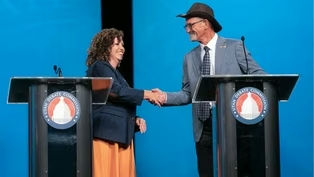
Candidates for Utah's 3rd Congressional District in the 2026 General Election debate the issues. (56m 15s)
Utah 1st Congressional District 2026 General Election Debate
Video has Closed Captions
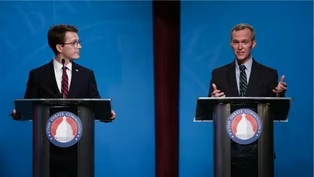
Candidates for Utah's 1st Congressional District in the 2026 General Election debate the issues. (56m 14s)
Providing Support for PBS.org
Learn Moreabout PBS online sponsorship- [Narrator] From the campus of Utah State University in Logan, the Utah Debate Commission welcomes you to the general election debate for Utah's Second Congressional District.
(uplifting music) - Welcome.
I'm Heidi Hatch, moderator for this exchange tonight.
And on behalf of the Utah Debate Commission, thank you for joining us.
(audience clapping) This evening, we will hear from two candidates who qualified for this debate in the race to represent Utah's Second Congressional District.
The candidates are Democrat Peter Crosby and Republican Blake Moore.
We look forward to an engaging and civil discussion with the goal of helping Utah voters make informed decisions.
Candidates will each receive one minute to answer our questions with up to 30 seconds for rebuttals, if needed, at my discretion.
A coin toss was held prior to the debate, determining that candidate Crosby will deliver an opening statement first, we'll then alternate turns on those remaining questions.
Now, candidate Crosby, let's begin with your opening statement.
- Thank you, Heidi.
And thank you to the Debate Commission, and thank you to Utah State for hosting.
And thank you to my challenger, Mr.
Moore, for joining us here on the debate stage today.
I find myself in somewhat of a unique position in that this is home.
So not only is Cache Valley home, (throat clearing) excuse me, my girls have made fun of me.
I've cried three times in the last six months, zero times in the last 18 years.
But USU is my home.
And I'm grateful to be here with an audience that I know.
I'm also grateful to be here, like I said, in another unique position, which is a challenger to be the first representative of a new district, a new district that I already represent thousands of individuals, as I have met you at town halls, as I've talked to you on the phone, met you on your doorstep, texted, answered your questions.
You have shared with me a desire to have a broken system fixed.
And that's why we're here tonight, to talk about how we fix what is currently broken and how we build a future for every generation to come.
- [Heidi] Mr.
Crosby, thank you.
Mr.
Moore, your opening statement.
- Thank you, Heidi.
Appreciate it.
Thank you to the Debate Commission again, an organization that always runs such excellent opportunities to debate the issues, at Utah State for hosting.
I really appreciate it.
Mr.
Crosby, we've had a few interactions on the trail so far, and it's always been about the issues, and it's always been respectful, and I really, really appreciate that.
You have no idea.
I just wanted to make a quick point.
As I think about what I would want to communicate in 30 seconds to my constituents and is to reiterate the fact that my time in Congress, I don't think it's any surprise to anybody, has been extremely a divisive environment.
I think that plays out in our homes, and we see that constantly.
I think it's worse.
It gets portrayed worse than it actually is, but it is a divisive time, and it has been in my experience.
And the thing that I focus the most on is maintaining a productive lane.
And I've been able to do it under a Democrat and a Republican administration.
I've been able to pass more legislation than anybody else in my cohort, from Great Salt Lake to Hill Air Force Base, to pro-growth and family policy with regards to tax.
And it's something that I'm going to continue to do.
- Mr.
Moore, thank you.
Let's get to those questions and have a civil debate tonight.
The first question to Mr.
Moore, demand for data centers and AI-related infrastructure is increasing rapidly.
While these facilities can bring investment and jobs along with it, they also require land, electricity as well, and in some cases significant water resources.
How should our communities evaluate those trade-offs?
- Yeah, absolutely.
And this is obviously one of the biggest topics in Northern Utah with everything that went on with the data center proposed earlier this spring.
And what we learned from that, what local officials learned from that was they have to be able to engage the public, and they have to bring the public along.
When I found out about it, it was April 24th, and this was well in the process.
The commissioners had just barely found out about it too.
And when I met with investors about this, the individuals that were a part of this, I said, "You have to do two things: You have got to be focused on making sure that the people know what's going on, and then you have to get involved in the Great Salt Lake issues."
Data centers are a part of our immediate future, right?
There's no question.
We're all using cell phones.
We're all, you know, doing some type of AI utilization and whatnot.
But the issue is we cannot have this kind of situation take over the way that it did, and that people have to be brought along.
There's good, strong legislation that should have passed in the Senate, but it didn't, to make sure electricity costs don't go up for residents.
And the Department of Defense is doing a unique thing where they're going to start to use more of their resources and their land in a more productive way, which is a good change that's happening.
- Mr.
Crosby, the same question to you.
How should our communities evaluate these trade-offs?
- Yeah, so I was there when the commissioners had conversations in Box Elder.
Our volunteers had been there from day one.
I was there when the commissioners voted.
This has been an issue that I have been intimately involved in from day one.
And I didn't make a call to the commissioners and tell them to accept the deal so they could get something out of it.
I advocated that they vote for not yet, so that we could get more information and keep local control over this kind of decision.
And I think as we talk about the future of data centers in Utah specifically, we have to acknowledge that local control is oftentimes being ignored because external pressure coming from the top down is forcing a decision against the will of local residents.
That's inappropriate.
I am all for a future where local communities decide whether or not that kind of infrastructure is appropriate for them.
And what we have seen in Box Elder is a direct counter to that reality.
Instead, it's reality, again, where top-down pressure forced through a decision.
- So Mr.
Crosby, the next question on the same issue, what conditions would you specifically require before supporting a data center project in District 2, whether it be in Box Elder or elsewhere?
- The very first thing is I would expect and demand full transparency on all of the potential impacts associated with the data center, whether that's environmental impact.
The Great Salt Lake is in crisis right now.
We have serious water concerns.
Utah is like the third driest state in the nation.
We can't afford water infrastructure that goes to technology before it goes to farmers and communities.
I would expect to see full transparency on the tax promises given to a corporation that oftentimes come at the expense of a local community.
I would expect full transparency on who's going to accept the bill if the data center isn't built on time, or if the industry, which might be in a bubble right now, fails to support ongoing employment as a result.
At the end of the day, I don't support anything that my local constituents do not support.
And I think that's the most important one.
Do local communities have an actual say in what happens?
And I think a public referendum on a project that could have decades worth of impact is not inappropriate.
- [Heidi] Mr.
Moore, same question.
What conditions would you require before supporting a new data center?
- Thank you very much.
The concept of local support was brought up in this particular Box Elder issue, but it has to be ubiquitous in any community across our country.
And I believe that, you know, that lesson was learned.
It was learned where you cannot, you know, those type of mistakes can't be repeated.
And I'm hopeful that that type of decision-making is altered going forward.
And I think as I've seen, you know, been, you know, privy to certain conversations about this, like, yeah, we have to change up this process, and that's a good thing.
And I think that the residents spoke up.
Local support, rate payer protection has to be a key part of it.
Utah has embraced some of those elements.
We have a federal bill that should have passed already.
It was blocked by Senate Democrats because it's a political thing right now, unfortunately, but rate payer protection, and ensuring transparency with regards to resources.
I mean, water is particularly the issue here.
In other states, they have other types of constraints, and we just need to make sure that water is key, paramount here.
- Mr.
Moore, let's stick with you on the same issue.
Transparency really is at the heart of this issue when you listen to people about what their questions and concerns are.
There's been discussion about the process by which data centers have been approved, with stakeholders at the local state and federal levels providing their input.
What changes should be implemented to ensure constituents in the district think the process is both transparent and also fair?
- Right.
And so, obviously, MIDA then became a more household name when people understood that that organization was, you know, a part of this.
It's a local state-level organization that gets involved in military-type projects and national security projects.
We need to mimic what took place in a project called Falcon Hill.
It's adjacent to Hill Air Force Base.
It's provided really great unique opportunities for workforce, improved mission support across the board, and it's been an overall positive.
And so whatever we can do to make sure that we're mimicking that process that was done there and implement that in the future.
But as I mentioned also, this has been sort of a nationwide sort of eye-opening, like, "Hey, there is a need for this, but how are we going to implement it?"
And we have the opportunity to use military bases and land that we already have designated for elements of national security, to embrace that more and be able to do that in a more systematic and better way that doesn't have such a local impact.
- [Heidi] Mr.
Crosby, is MIDA part of that process?
Is it working here in Utah and specifically in this district?
- I would say that most voters in Northern Utah don't think that MIDA, as currently constituted, is effectively working as part of that process.
MIDA, again, is a board of unappointed, unelected officials that have zero accountability to the public, which has created a great deal of concern about transparency.
And while this is primarily a state issue, and I am running for a federal office, I think that principle of open and transparent government has to extend beyond just the state borders.
When a population gets a weak notice that there's going to be a vote that they had no insight on, that creates a generationally impacting project in their own neighborhoods, and then the commissioners themselves are pressured from the top down to go ahead and vote yes because you got to get something out of the deal.
That's a failure, right?
And so a reform of MIDA, from my perspective, is absolutely needed.
And a house bill with some teeth would be needed, not just something that says it might be good if states maybe thought about having some energy policy around data centers, but something with an actual enforcement mechanism.
- Thank you very much.
Our next issue is water, and water is tied into the data center issue as well.
Water is increasingly being asked to support population growth, agriculture, environmental needs, and industrial development.
What principles should guide difficult decisions when those competing demands cannot all be fully satisfied?
Mr.
Crosby.
- This is a very good question and a very timely one I think, especially for the West.
Whiskey is for drinking, water is for fighting, right?
And here we have seen I think the long-term consequences of a water policy that has failed to account that you can't always persist with conflicting priorities.
The state of Utah specifically, I want to be very clear, I think this is state policy.
I don't want the federal government making water policy for the state of Utah.
I think that's a bad road to head down.
The state of Utah has to decide, are we a state that grows to 10 million people?
Are we a state that decides to fully invest in Silicon Slopes?
Are we a state that decides to maintain local resiliency in agriculture?
We can't have all three.
We've already over-allocated water rights within the state, and our elected representatives have to be willing and courageous enough to decide what does our state look like in concert with our local communities.
It's community governance.
- [Heidi] Mr.
Moore, we want our children to stay in the Utah that will grow the population.
We're asking others to bring business here as well.
How do you work with all of these different needs?
- Right.
It's the number one issue for any type of growth discussions that we have.
It's a limiting resource, and we're seeing it play out.
There's a concern, I think, among pretty much every Utahns because it gets communicated okay, people understand that this is a problem.
Right now you have two major issues.
You have the Colorado River.
There's a compact there with all the states, the upper, the lower states that are working through it.
There's progress there and trying to get into the right, you know, divvying up that resource, but more importantly, more of an issue is obviously Great Salt Lake.
I've loved the opportunity to have been a part of passing actual legislation, right?
The Great Salt Lake is not just a lake in Northern Utah.
It's the largest saline lake in the Western Hemisphere.
It's crucial to bird migration and all the things that come from that.
And we were able to get legislation done.
We were able to do bite-sized projects to help funding the support from different elements of the lake that the state is actually leading a lot of the effort.
And then, of course, you're seeing the White House now get involved.
So it's nice to be able to see a throughput continuing going on how important this issue is.
- Time on this question.
I want to continue with you on this same issue, Mr.
Moore.
I'm old enough to remember swimming in the Great Salt Lake.
Nobody wants to do that anymore, but the Great Salt Lake is a major issue.
The future of the lake affects our air quality, public health, economic activity, water policy throughout our region.
What should Congress' specific role be in supporting efforts to address challenges facing the lake?
Also, should that include passing the White House proposal you mentioned for $1 billion in the federal budget to make sure that money comes to the state of Utah?
- I just drove my son to his football game past Saltair, and told him, "This is where grandma and grandpa used to come and go to concerts, and this and that.
This was a bustling area."
I remember when I was in high school, we were planning after a dance to go sailing out on the Great Salt Lake.
And that generation, that type of experience with the lake is gone.
There's still good solid sportsmen and women issues out there, and ability to duck hunt, but it's concerning from what we had.
And again, so I kind of mentioned before, I even brought up the concept of the White House putting a budget proposal together.
The president's budget, I've seen them for six years now, and there's a lot of priorities that they put in there.
I love that the attention that the administration is putting on it, but just by saying $1 billion does not equal it's going to turn out to be $1 billion.
That's not the way our appropriations process works.
But we are working very close with the delegation to find a lot of... in the tens of millions of dollars of range to be able to go and support what the state is already doing.
And that is possible because the state does a good job of having these projects shovel-ready.
So we're doing more and more of that, and we continue to do so.
- [Heidi] Mr.
Moore, thank you.
Mr.
Crosby, when you look at this and that $1 billion, can we spend the money to save the lake, or what's your best option?
- Yeah, absolutely.
I mean, it's an existential crisis, and I'm not fond of hyperbole.
My parents live on the shores of the Great Salt Lake.
They're already breathing the dust that is blowing off in these storms.
There's at least three solutions based off of the conversations I've had with water managers and other people in this space.
The first from a federal perspective, and it is a federal issue, right?
This is a national security concern and an interstate issue, is to get water to the lake.
The lake needs water.
It doesn't need money, it needs water.
So there are several plans that protect private property rights that would have long-term leases for water flows into the Great Salt Lake.
It is the most effective solution that can be implemented now.
And that's important, right?
We can't wait five or 10 years for another commission.
No more bite-sized, we have to do this now.
The second, there's invasive plant species that need to go ahead and be effectively mitigated.
I appreciate we've had some funding in that direction.
We need more funding.
This will help maintain the lake.
And that final maintenance piece really is the reality that our water infrastructure is aging.
It has to be effectively restored.
We lose a lot of water in downstream flow, and this is exactly the kind of project that federal resources can be devoted to.
- Mr.
Crosby, thank you.
Water is an issue.
Energy is an issue as well.
While Utah needs reliable, affordable electricity, new energy development can create environmental and public health impacts.
What mix of fossil fuels, nuclear power, and renewable energy should Utah be pursuing?
And what environmental costs are you unwilling to accept in the name of lower energy prices?
Mr.
Crosby.
- Well, first, I'm unwilling to accept a solution for today that sells off our future.
We've seen too many of those solutions justified and saying, "Well, we drive gas cars today, so we need gas today."
My kids have a lake that's dying and an environmental crisis as a direct result of that thought process.
This year alone, solar energy generated one-third of Utah's energy in May.
We could have more.
One of the challenges that we have is that recent legislation passed by this Republican Congress deliberately and directly targeted Northern Utah's solar industry, which is going to cost us anywhere from $1.2 to $1.8 billion in lost economic revenue.
So not only do we have a failure to invest in a green energy solution that's proven to be viable, but we are destroying Utah jobs and Utah economic outcomes.
I'm against that.
As far as other solutions, Utah has a great potential for geothermal energy.
The biggest thing we have to understand is our energy security cannot be dependent on fossil fuels.
The war in the Middle East is showing that.
- Mr.
Moore, did you fail to act in Congress and break the system here in Utah?
- No, in fact, quite to the contrary.
The House passed a permitting reform bill.
The Senate took it up.
They have made some significant changes to it that are, I think, make it possible to actually pass and become law, and they're expected to finalize that right after the election.
I think any conversations I've had with the Senate, they are very optimistic that this permitting reform bill passes.
This is a group of bipartisan, bicameral legislators.
I'm a part of this to be able to see this through.
It deals with the issues that are fundamental to being able to go to an all-the-above energy approach, and that's some of the restrictions in place.
And there is a group of differing opinions that are actually coming together, pro-environmental people that make that their cause, other in the depths of Texas, where they focus mostly on fossil fuels and oil production, and they're coming together to be able to make some advancements here.
I think this can actually get done in the last few months of this Congress.
- Heidi, I'd like to make a clarification, the call out that I specifically had was related to H.R.1, also known as the Big Beautiful Bill, which stripped subsidies for residential solar, which has been a significant industry here in Northern Utah.
And that is the number that I'm concerned about.
That's that $1.2 to $1.8 billion lost over the next four years.
That was a bill that was co-authored by my challenger.
And so I'm curious about how we justify that in this context by saying, "No, I didn't do any harm here."
- Absolutely.
And you can talk to every solar company in the entire state at how I went to bat for them.
We actually, Senator Curtis was a big, strong voice in this as well.
And so, there are tax subsidies that are targeted just to certain industries that were led by the Democrat bill in 2023, I believe.
What we're trying to do is get an all-the-above energy approach where there's a level playing field, and you go talk to every single solar company in Utah, they'll know that I was somebody that was willing to go and create tough conversations and push back heavily in support of those organizations.
- Thank you, Mr.
Moore.
Our next question looks at representation in this new district.
The district includes communities with very different priorities, including urban and rural areas, agriculture producers, technology firms, and outdoor recreation interests.
How would an effective representative best decide how to balance competing concerns among the various different constituencies in this new congressional district?
Mr.
Moore.
- Well, the now Second Congressional District, Northern Utah, I've had the opportunity to serve it for several years in Congress.
This has been one of the neatest things to be a part of.
We have an amazing manufacturing capability here.
I brought in a Democrat friend of mine from California.
We swapped and went to each other's districts to learn more about it.
He has some unique ag stuff, and he was blown away by the manufacturing that we actually do here.
And we have ag, we have tourism, we have defense.
Like there's nothing that... We have an opportunity to chew gum and walk at the same time.
We have the ability to be able to go and broadly support them.
But what I'm been most focused on this last year was that if we would not have acted and passed tax legislation, the child tax credit, which is one of the most important things for Utah because we are a state that invests in families, we have larger families, would've gone back to the pre-2017 levels of 1,000 bucks.
And we not only doubled it, we increased it and tied it to inflation and made it permanent, all under that particular bill.
It's been an awesome experience to be able to go fight for families and make sure that they have the support, the adoption tax credit, and all those types of... - We're at time, Mr.
Moore.
Mr.
Crosby- - [Mr.
Moore] Getting going on tax policy.
I apologize.
- He's a tax nerd here.
I want to talk about the diverse nature of this district and how you see working with all of them.
- Yeah.
I think the most important thing that I need to remember is, first, do no harm, and then second, help as many as I possibly can.
And when I look at our existing policy right now, policy that Mr.
Moore has voted for six times to maintain, tariffs are harming everybody.
They're harming farmers, they're harming ranchers, they're harming small business owners, they're harming families.
If we look at what this district has lost just as a result of two kinds of votes, a vote to maintain tariffs and a vote to maintain the war in the Middle East, Utah's northern CD2 is already lost anywhere between one and a half to two billion dollars.
That's tariff costs that range anywhere from three to six thousand dollars, three is on the conservative side.
It's additional fuel costs that are $1,400 easily.
It's the direct cost of the Iran war and financial concerns.
If I'm interested in the welfare of everybody in my district, my priority should be to focus on policy that helps everyone as best as I can and does no harm first.
- [Heidi] Mr.
Moore, your response on that on tariffs?
- Correct.
I'll just briefly mention tariffs are one of the toughest things that we've had to navigate this last 18 months.
As you go, and we talked a lot about Box Elder County, there's two more examples.
I have a manufacturing plant that depends on the fact that there's tariffs for their industry, so they can actually compete fairly.
There's multiple companies like that, but there is a lot of pain with this.
And every time that Procter & Gamble has reached out to our office, we've gone and actually successfully been able to mitigate their issues.
If they have something that they can't source in the US and the administration is trying to tariff it, we have gone and successfully removed that.
We go to bat for our folks here, and we'll continue to do so.
- We're at time.
A quick rebuttal.
- Yes, ma'am.
If I may say, Procter & Gamble, that's great, but none of the small business owners seem to receive the same attention.
We know because we've had those conversations, just like we actually talk to the people in the solar industry, and they describe their experiences very differently than has been described tonight.
- Thank you very much.
Up next, we have a student question from Greyson Haycock, an information systems major.
- Thank you.
In 2022, the last midterm election, Utah's eligible voter turnout was 46.8%.
Comparably, the 18 to 24-year-old eligible voter turnout was only 15.8%.
This district contains both Utah and Weber State Universities, and young communities are a large part of Northern Utah's identity.
Please tell these young voters, both those who consciously choose to vote and those who consciously choose not to, which specific policies would you pursue in Congress to improve their lives, and why should they be motivated to vote for you?
- Greyson, thank you.
Mr.
Crosby, you're up first.
- Yeah, my daughter is 18, just graduated high school, started university this semester, and we've had the conversation that she never expects to own a home.
She never expects to be able to work a job that actually pays a living wage.
She doesn't expect to be able to settle in Utah.
And I think about the federal policy priorities and what we should be focused on, and I think there's very specific things that we can do.
We can reinvest in existing programs at the federal level that have been disinvested in by this administration.
We can ensure that there is funding to build accessible housing that focus on community builds and nonprofit builds, which have a proven track record of reducing housing costs, not making it so people can buy more expensive homes, but actually reducing the cost of housing.
We can close corporate tax loopholes.
There's no reason a corporation should receive a tax break if its workers are dependent on taxpayer subsidies.
That in and of itself would help improve the wages that our American workers are making.
- [Heidi] Mr.
Moore, your response?
- Absolutely.
Let me bring up one specific example that I think would be relevant to you and folks that are in your stage of life and going through school and trying to educate yourself.
We put a cap, in last year's legislation, we put a cap on a federal tuition.
Said, look, here's the cap.
We bifurcated it for more advanced degrees, lower degrees, and what happened within months of doing that was that universities started to lower their tuition costs.
So would they be able to get it under the cap?
Now, I have a big problem with why were they as high as they were in the first place, but it took us to be able to say, look, we do not want students taking out mortgage-sized loans for a flex MBA program.
And you can look across the country and you can see cases where they're actually lowering their tuition in direct response to constraints that we put on.
That is a direct impact on various ways to keep it so it's more affordable for you to go and invest in yourself and be able to go and create that American dream that you want to do.
And that's just a simple example that, you know, oftentimes gets overlooked.
- Mr.
Moore, thank you.
And Greyson, thank you for your question.
Up next, Mr.
Moore, the federal government faces rising debt, growing entitlement obligations, and continued demands for defense, infrastructure, and other public services.
What specific budget priorities would you be willing to scale back, reform, or eliminate in order to improve the nation's fiscal outlook?
And if you're not willing to scale back, what new sources of revenue or taxes are you willing to consider?
- Thank you.
I appreciate this question.
It's one of the most important things we deal with.
On the budget committee, this is always front and center.
We just had a, unfortunately, we have to call it a debt summit.
But we had a debt summit a few weeks ago with experts coming in.
We need to enact a fiscal commission.
We actually got it done in Congress ago, and we did not believe that Senator Schumer was going to be willing to advance it.
It did not end up getting passed out of the House, which was unfortunate.
But an opportunity to do a fiscal commission, and if we can get the administration to agree to this, we have an opportunity to actually take a bite out of this, and then move this debt trajectory in the other direction.
In calendar year 2025, the thing that I was most excited about was that we saw that we could actually reduce our deficit by $360 billion.
Now, that's not a balanced budget by any stretch, but we saw that we could successfully do it.
Too much of it relied on tariff revenue, and the Supreme Courts, you know, rightly made their ruling on IEEPA, but we showed that we had the opportunity to be able to do it.
A fiscal commission is something that I talk a lot about.
I put a lot of information out about it.
If we can enact that, we can actually get after this and do this in a broad scale that's bipartisan and could be lasting impact.
- Mr.
Crosby, if elected, where do you cut back or find new ways to find money?
- Yeah, I think the fiscal commission is absolutely a good step in the right direction.
I would emphasize, though, that we don't ask the administration for permission.
Congress is the most powerful branch of government by design.
Congress legislates, they pass the law, and the executive then comes to the table.
I think there's a couple of opportunities.
One, we have to close tax loopholes.
So, my inspiration for this is actually Dwight Eisenhower, a Republican president, the last president to actually have a budget surplus from World War II until President Clinton.
And he rightly recognized there's only two ways to close a national debt.
You have to increase revenue and decrease spending.
That's it.
There's no silver bullet here.
Right now, we have consistent tax cuts that do not pay off.
They lead to $3 to $4 trillion in additional national debt.
We have to acknowledge that we have to have tax loopholes closed.
And when it comes to things that we need to focus on, I'm actually with a representative on this.
We should be focused on fraud.
We should be focused on government waste.
Those are taxpayer dollars that are being misused, and our dollars should be used appropriately.
So anything we can do to cut down on fraud and waste in our largest systems is an appropriate focus.
- Mr.
Crosby, thank you.
We have now reached the halfway point of this debate featuring candidates in the race to represent Utah's Second Congressional District.
If you are just joining us right now, I'm Heidi Hatch, moderator for this presentation of the Utah Debate Commission.
We're coming to you from the Chase Fine Arts Center at Utah State University in Logan, Utah.
Let's get back to our questions.
Mr.
Crosby, Northern Utah has emerged as an important center for aerospace, defense, and space-related industries, what should Congress specifically do to strengthen Utah's competitiveness in these specific sectors while also ensuring long-term economic growth?
- I love this question because I feel like I'm already part of the solution here.
I had mentioned that I actually teach at Utah State University.
I'm an adjunct faculty member with something called the Center for Anticipatory Intelligence, which from my perspective is the poster child of what we can look at for solutions to developing workforce talent and supporting this kind of industry going forward.
It's public-private partnerships with a strong connection to the national security community.
It started actually with help from Mr.
Moore.
So he ensured that some of that initial funding was there.
And I think that every opportunity the federal government has to invest in workforce development and programs that have a proven track record, a developing workforce talent that helps our national security community meet and exceed their mission standards is a good investment.
I think we also have to acknowledge that the health of the Great Salt Lake has to be restored here in Utah.
It is a national security concern.
We've been through base closures in the past in Utah.
It's not something that we want to experience again.
And if the lake dries up and dies, Hill Air Force Base is at direct risk.
That has to be a priority.
- Mr.
Moore, how do we ensure that growth in this sector?
- Absolutely.
And I appreciate Mr.
Crosby for mentioning, I love the Center for Anticipatory Intelligence.
I have a background in this, and it's been an honor to be able to support them.
Space Dynamics Lab, although they like to keep a low profile, it's a hidden gem that exists not just here, but it's very important.
The world of space is the future, and we in Northern Utah are already leading on this initiative.
With respect to Hill Air Force Base in particular, though, there's two main things.
F-35 modernization, sorry, F-35 sustainment, and Minuteman, the ICBM program, and the modernization of that.
So the Sentinel program was in its infancy when I first came to Congress.
We've been able to usher through the funding, help as it navigated the Nunn-McCurdy rules because of the budgetary shortfalls that it's had.
We've been able to navigate and make sure that that has a strong future.
That's key and very important.
It's a lot of jobs, but it's actually so crucial to our national security, and provide funding.
We've got record funding that we've already been able to secure for Hill Air Force Base with respect to the canopy infrastructure and what we do on Hill Air Force Base.
Folks, this is amazing what Hill Air Force Base technicians can do.
They cleared the backlog of the F-16 and they're working on the F-35 in record time, and they're doing awesome things.
- Mr.
Moore, let's stick with you on this and talking about the balance there.
Members of Congress often advocate for military installations in their own districts, like Hill Air Force Base, while also making decisions about the national defense priorities.
How would you balance the interests of Hill with the broader goal of ensuring military resources are allocated where they're needed the most nationally?
And maybe that might not be Utah.
- I love that question because I remember asking that in a forum I was at when I first was involved in the national, er, the Armed Services Committee.
The best part for me is Hill Air Force Base has a broad program set, and it's things like you wouldn't necessarily expect, but the software program at Hill Air Force Base is second to none, and it has got a constant need for new talent.
And then, of course, the big things, the flagship stuff like the F-35, it's all core to our national security.
When we are any type of deployment and we're involved in any conflict, Hill Air Force Base is there.
The men and women that live there, that serve their active duty, and the civilian, they are a huge part of the mission.
So there really is very little daylight between what we do here and my support for that and why it matters to national security.
The A-10 is a great example that I've advocated for moving on.
We do a lot of stuff with the A-10, but it's not necessarily part of the next generation of war-fighting.
So it's time to continue to retire that weapon system, and by doing so, we can embrace new opportunities.
- Mr.
Crosby, your balance there between Utah and the nation.
- Yeah.
The A-10 has a soft spot in my heart, so I apologize if I disagree.
I wanted to fly him.
I was in the ROTC before I blew my knee out, and that was a potential career path.
I agree with the representative here in that Hill Air Force Base serves a critical role in multiple areas of our nation's defense.
And there is very little daylight, to his phrase, between what is good for Hill and what is good for the nation's security.
I would say, though, that in order to ensure that the base is able to continue its mission, we have to focus that it's not just on our active duty personnel and their dependents, it's also on the civilian contractors and federal workers there.
Federal workers that we have a hard time retaining because cost of living in Utah has increased significantly, and yet they've been offered a 1% and then 0% cost-of-living raise.
This is something that could have been handled in any budgetary year, and yet has refused to be directly addressed.
If we're going to maintain the mission of Hill Air Force Base, we have to ensure that our civilian workforce is properly compensated.
- Speaking of raises, I want to keep the focus here, Mr.
Crosby, on the economy.
Utah State University has a strong tradition in agriculture, and a sizable portion of the state's agricultural business is right here in this district.
Farmers have been especially squeezed in this economy with the rising price of diesel fuel and a trade war that we've mentioned with tariffs.
How will you address these issues and protect our farmers?
- Yeah, I think, I mean, you mentioned the very first two things that have to change.
There's a lot of ag policy I think that we can get into, but the macro-level conditions are what's most important.
I have talked to several ranchers in Box Elder County who have been pretty honest with me.
We can't continue.
We're not sure if this is going to be a hundred-year-old ranch that they're not sure they can pass on to the next generation.
When diesel hits six, seven bucks a gallon, that impacts everybody, but it certainly impacts those in our agricultural community the hardest.
You have to end a broad tariff regime.
Tariffs are fine when they're used for strategic purposes, but this isn't strategic.
This is now an effective tax on the American people that disproportionately hurts our agricultural community.
This war in the Middle East, I mean, when the executive decides to attack two of the largest oil producers in the world, close a strait that's necessary for the transportation of goods and energy, and then we buy more diesel from the country that's funding the country that we're being attacked by, like all of that is going to directly contribute to challenges in the ag sector.
That's where you start.
- Mr.
Moore, let's focus on our farmers and those fuel prices.
- Well, in addition to that, I'll continue with a little of that thought.
This proposed deal with Russia, our estimations are in the range of maybe 10 days of supply.
Right after, on the heels of Congress coming together for a very strong Russia sanctions bill, right?
And so, it's counter to what we were expecting to see, and it will have very little limited or no material impact, and we have to get to the root of the problem, right?
And that is, I've seen this for my time in Congress.
Gas prices went through the roof during the Biden administration.
I did not expect when the Republicans were in control of the House, White House, and Senate for it to be the case.
But as the war in Iran kicked off and has sustained, it has prolonged, this is becoming a major, major problem.
I've encouraged a ceasefire.
I was hopeful for the MOU to be able to play out, and it simply... it fell to the wayside, unfortunately.
And there is a strong motivation to be able to get this figured out so we can move past this.
This is way too difficult, particularly on those important industries, like you mentioned.
- Mr.
Moore, let's focus still here on the economy.
The most recent reports show that job growth was softer than it was expected and wages are not keeping up with inflation.
What specific actions should Congress be taking to address these issues?
- Right.
Well, the reason why inflation continues to uptake is because fuel prices are too much.
And so that leads to higher transportation costs, higher food costs, and the like.
And so, that has to be immediately, that has to be addressed.
What we're hoping to see out of the permitting bill that is likely going to pass here in the coming months is an ability to be able to embrace what we have, increase our domestic supply so we don't have to rely so much on foreign sources.
And if we can accomplish that, you could see some relief that's actually substantive, other than like, when I see my colleagues, during the Biden administration, they're like, "Oh, why is President Biden proposing, you know, a gas tax relief?"
And then now, it's under the Trump administration, and then they're doing it again.
It's like, you guys, that's just a double standard.
We can't do that.
We have to do something substantive, and that permitting piece is the actual something that we can do right now.
And then as the conflict in Iran, as we push to draw this to an end, we have the chance to maybe remove that issue as well.
- Mr.
Crosby, what can Congress specifically do about inflation?
- Yeah, we don't need hope, we need votes.
If we've identified that the war in Iran is the cause of this inflation, if we've identified that this broad tariff regime is what's harming our economy, we need votes.
And Congress is the most powerful branch of government.
I don't think anybody that I have talked to, the thousands of people across Northern Utah are like, "Well, great.
We hope we can fix it."
They want somebody that is in office that will say, "No, actually, I have a moral obligation to my district before a political party, before anybody else, and I need to vote in a way that's going to solve these problems."
We could vote to end the war in Iran.
We could.
It would only take one or two Republicans to cross the aisle.
The House is that close right now.
We could vote to end a broad tariff regime.
We could.
Again, it only takes one or two Republicans to cross the aisle and say, "I'm going to put the needs of my district before my political party or loyalty to an executive that seems to be maybe a little bit strategically challenged when it comes to putting the needs of Americans first."
That doesn't require committee work, it just requires courage.
- All right, thank you.
We want to continue on the questions of economy here.
We have another student question from Kallie Robinson, law and constitutional studies major.
- Thank you.
We touched on this a little bit earlier, but for many young adults, moving from relatively accessible shared or student housing during college to securing their own stable housing after graduation has become increasingly difficult.
High rent, limited affordable housing, and entry-level wages can make that transition particularly challenging.
What do you see as the primary causes of this problem, and what specific federal policies would you support to help young adults make that transition?
- Kallie, thank you.
Mr.
Crosby, you'll start on this.
- Thank you.
Yeah, I mean, I mentioned my daughter, right?
She's a freshman here at USU.
This is a conversation that we have in our family.
Our house isn't that big.
I can't afford to have her back in the basement forever.
So we're really motivated to solve this.
I had mentioned a couple of things prior, those reinvestment and projects or programs that already exist that allow community builds, nonprofit builds that have a proven track record of lowering costs.
I want to touch again on the corporate tax loopholes, though.
The reason that we don't have living wages right now, and we don't, is because we have a tax system that incentivizes the wrong things.
We need a tax system that rightfully again invests in the American worker.
I'm going to go back to Eisenhower on this, right?
Republican president understood that and invested in the American workforce, which created the strongest economy in America, like that's what gave us our foundation.
I'm actually also in favor of other policy reforms.
For Fannie Mae and Freddie Mac, I see no reason why a rental history can't stand in for credit history.
If you've paid your rent for five years, I'm pretty sure you can pay a mortgage.
So let's go ahead and make that happen.
- Mr.
Crosby, thank you.
Mr.
Moore, your kids are not old enough to kick out of the house, but eventually they'll deal with this issue.
- Maybe one of the most important questions we'll take tonight.
So great job.
Very impressed.
Causes.
If you want to boil it down, it's a supply issue, right?
That's ultimately what happens in an economic factor, is a supply issue.
There's a lot of other elements to this, but that's one key issue.
The solution.
Let me propose something that is not talked about much and you're not going to have heard about it, but I hope that you'll take this information and go study this a little bit and look at what the actual components of this bill are.
It's called the SHARE Act.
And so, there's a group of impact investors, and I love the concept of social impact investing, right?
These are people that want to do good.
They don't care as much about their returns that they're getting, and they want to be able to do a broad good for people.
It's an area that I worked in professionally.
A group came to me and they said, "Hey, we have an idea for a bill.
There's a company called Homium.
There's many companies like this.
They are going to share in the cost of a down payment, take a very little percentage out of this, and giving that individual an opportunity to own."
What you saw was a proposal from Vice President Harris when she ran for president to do a $25,000 sort of tax giveaway or just giveaway to people.
Unfortunately, all that does is create more inflation and home prices probably go up in another 25.
But this market-based solution, it's awesome.
We're leading the effort, and we're trying to create legislation and regulatory framework to allow for it to be more ubiquitous.
- Mr.
Moore, thank you.
And Kallie, thank you for your question.
I want to focus now on growth.
Rapid growth in places such as Cache County and the western parts of Davis and Weber counties have created high demand for our roads, water, infrastructure, schools, housing, and also energy.
How much should those costs be borne by new development, local taxpayers, the state, or possibly the federal government?
Mr.
Moore.
- I mean, I don't know the breakdown from who gets to control what costs and everything.
We need just solid decision-making to be able to look at the issues, not just what's going to be happening in the next five years, but longer out.
We're engaging on an effort right here in North Logan.
They have a water issue, a storage water issue, and their mayor is amazing.
They've come to us on multiple years to try to help build this potential project.
They're seeing the future as a problem that they have and they're trying to solve for it now.
And we've been able to work with them, to be able to get them in the pipeline, to be able to help along with what they're already doing.
We don't just come in and be able to provide some funding.
These are things that are locally supported, and they're already shovel-ready, and we can come in and support them by looking at what ultimately is, you know, a potential problem.
So, I love these types of things that our local community members were bringing to us and we can help them solve problems.
- Mr.
Crosby, this growth is a double-edged sword.
- Yeah.
And I think the principle here, I mean, I respect that.
I don't know the exact percentage breakout, right, I just don't.
But I think that there has to be some guiding principles.
And for me, that starts with local control first.
And it also starts with prioritizing regular Utahns.
That's where the priority has to be.
And so if a local community says, "Hey, you know, we've got a problem and we can't solve it," the next step should go to the county level.
And if the county doesn't have the resources to help address that, then it goes to the state level, right?
And if the state comes in and says, "You know, we actually don't have the resources to address this," that's when it becomes a conversation between the federal government.
But the federal government should not be the first stop, right?
And it also, I think, needs to be said that we need to put the honest on private developers to go ahead and take responsibility for infrastructure development where they're wanting to build in new places.
Too often, we see that this has kicked back to the taxpayers.
We end up being the ones paying the bill.
PIDs are a perfect example of this.
And I know that this, again, state-focused, we're federal representatives, but I do not want communities bearing a tax burden that subsidizes corporate profits.
- Mr.
Crosby, I want to stick with you.
When we're talking about rapid growth, I think we can focus on technology, which is growing faster than I think any of us can keep up with.
AI is an area that people are concerned about, with some people saying it'll cause an extinction-level event within a decade.
Well, the federal government under the Trump administration is pushing for an aggressive AI agenda, trying to keep up or be ahead of China.
Where do you stand on this new area policy?
- Yeah, so I have some background in this.
I teach emergent technology for the Center for Anticipatory Intelligence at Utah State, and generative AI has been a topic of conversation for the last two or three years now.
AI, like any new or emergent technology, is generally neutral, right?
It's in how you use it.
My primary concern here is that the states themselves should have been the laboratory for regulation and policy implementation, or federal system.
That's what the states exist for in part.
Instead, what we have in this executive branch that has by executive order refused to allow states to engage in their own administration regulation of this new tech.
This is a place where Governor Cox and I actually agree.
I think that AI has to be human-centric in its development, and it has provided a terrible burden now on the federal government because it does not know yet which regulations will be effective in this space, because we have prevented our state governments from effectively engaging in this space.
And so we don't know what works.
We don't know what doesn't work, which is a problem that should have been solved by now.
Does the federal government have a role?
Absolutely.
- Mr.
Moore, who has the biggest role in AI?
- Right, so I just want to give a lot of kind of kudos to the state for what they actually do in this space, giving great examples to us in the federal delegation to be able to pursue certain types of regulatory options for this emerging technology.
I think to an individual named Doug Fiefia, actually, he's a state rep moving to the Senate.
He was key in creating a voice to make sure that Congress was able to push back on the administration, sort of we want to have a moratorium on any type of state-level regulatory push for AI.
Personally, the things that I like to highlight, like you mentioned my boys.
So I have a son that's special needs, and he engages with Alexa.
He loves to talk to Alexa because easy conversations, he gets all these facts and figures, and then repeats them to us, but it's easier for him sometimes.
So we have these really, really good bills that are going to be able to protect children with respect to AI chatbots and these relationships that people think are starting to become real to them and making sure all the disclosures and everything that are done.
So the application off of this generative AI power is key, and we need to continue to push in this direction.
And I think I'm out of time because I can go on and on about this, but those are the ways you actually deal with this, is deal with the application of it.
- Mr.
Moore, we'll stick with you on technology.
This is another one people are talking about here in Utah and really across the country.
There's a new F word in the state of Utah.
There were 10 Flock safety cameras in Weber County searched over five million times.
This was just in the last four years, with 97% of those queries coming from out of state.
What kinds of regulations, if any, should be in place across our state surveillance from these Flock cameras or other name brands?
How do you balance the law enforcement interests with the privacy concerns of our citizens?
- Yeah, absolutely.
I had a town hall a few months ago and I was able to bring Sheriff Arbon, Weber County Sheriff, to come on and actually assuage a lot of people's concerns.
I wish he was on stage with us right now.
He's an excellent public servant, somebody that I have a deep amount of respect for, and I get to work with him on multiple issues like this, and I trust what I see from his ability to approach this.
And so it's working closely with local officials.
I don't know the specific regulations on the timing and what is able to be captured through this, and not prepared to talk about that specifically right now, but I do have a level of trust with our local law enforcement to be able to do this in a way that respects the Constitution and also ensures public safety.
That's the rub, that's the things that we have to be focused on, and I've been engaged with them, and I love what they're trying to propose.
- [Heidi] Mr.
Crosby.
- Yeah.
First and foremost, we have to codify a right to privacy for all Americans.
It's not currently one of the rights that Americans have.
It's assumed, but technological development has certainly put pressure on that.
It also means that we have to have a right to data ownership.
New technology has certainly created a vast amount of data, personal data, which is accessible to corporations and the government, and Americans don't own their own data.
That's something we could change pretty quickly in Congress if we decided that we wanted to.
We even have templates on how to do that from other democracies throughout the world.
That balance, again, that concern for how does law enforcement do its job with how are we protecting the rights, the civil liberties of all Americans.
I would say that the other aspect of this that's particularly concerning is that Flock specifically has not been very honest about where its cameras are going or the relationships that they say that they have entered into with our local communities.
And local communities have found regularly that the data that they though was private to them has been exported.
That's happened here in Utah.
Those corporations have to have some sort of codified penalty when that happens, and it can't be a slap on the wrist.
- Moving on to our final issue, gentlemen, immigration.
Mr.
Crosby, we will start with you.
What should Utah's role be in federal immigration enforcement?
Specifically, what should happen to people detained here in the state of Utah?
Who should pay for that detention?
And what federal standards should govern detention facilities, or should the federal government be responsible?
- Yeah.
I think this is actually a broader question about immigration that I think it has to be answered before we can talk about the state's role.
Immigration enforcement and policy right now is broken.
I have American civilians killed on the streets of American cities by federal agents, and those federal agents face no accountability for it.
I have an immigration policy that is being enforced through administrative warrant, not bench warrant, which means the legality of the enforcement itself is suspect.
I have detention facilities where we have credible reporting of rape, and yet there is no accountability or transparency in those environments.
I have been to Camp Topaz when I was a senior in high school.
Utah has a legacy of falsely interning civilians.
It's not a legacy that the state would like to see persisted into the future.
We are a law-abiding people.
We'll continue to be a law-abiding people.
United States will always have an immigration policy, but it can't be enforced in the way that it is right now.
It has to be legal.
It has to be humane.
- Mr.
Moore.
- Thank you.
I defer to our chambers of commerce in Utah have a really good framework and solid layout for what we could ultimately try to accomplish here.
And there's ideals there that we want to continue to strive for.
Well, first and foremost, you have to have a secure border, right?
One of the main reasons I believe President Trump was reelected in 2024 was because there was so much mass migration, illegal migration, that was taking place, and people can look back at that and say, "Actually, the Remain in Mexico policy was a really good, sound policy that limited what the cartels could do."
So as we've done that, it's been a really big positive, and we've got to continue to move to get to the point where we'll be able to embrace the workforce needs of our country.
I've talked about this over and over publicly, privately to the administration.
There's a lot of voices that push the same way.
President Trump has indicated and hinted that he wanted to do it.
I have not seen the administration get to the point where they're delivering on this per se with respect to visa programs and everything like that.
So there's still hope that we can continue to push this.
- [Heidi] We're at time, Mr.
Moore.
Thank you.
- We always run out of time.
- We could use another hour to go on with this debate.
We have reached the end of the debate tonight.
Each candidate will now receive one minute to share a closing statement.
A coin toss held earlier this evening determined that candidate Crosby will go first.
- In closing, I would just like to say: I hope tonight that I've been able to earn your trust and your vote.
If you are in a situation where you've doubled your net worth in the last five years and you're not really worried about where your kids are going to be able to go to school or if they can afford a house, I'm pretty sure I know who you're going to vote for, and that's fair.
If like me, you don't fall into that particular category, there's a vision of our country that's different than the path that we're headed down now.
It is a country where the economy works for regular people, where we have access to things that we need, like healthcare and housing, where the great Salt Lake is healthy, where our public lands are protected and available not just for our kids, but for every future generation.
And that's a future that happens when we elect people who are transparent and honest in their dealings in government.
That's the future that we're fighting for.
It's the future that tens of thousands of Northern Utahans have already said, "This is what we want."
So tonight, I hope that I've earned your trust and your vote for that future too.
- [Heidi] Mr.
Crosby, thank you.
Mr.
Moore, the final word.
- Thank you.
Thank you to my challenger, Mr.
Crosby.
Heidi, you do an excellent job.
I appreciate the chance to share these ideas and discuss these topics, again, to the Debate Commission.
To Jane and the boys, if you're still watching, thanks.
Thanks for everything you do.
I am literally in this for my four boys, right?
I've missed a lot over the few years, and they have a resilience to understand why I'm doing this.
And I'll just take this chance to end similarly to the way I ended the debate during the primary season, was I got to do something that was one of the most gratifying things that I was able to accomplish.
I care about the future of our children, and we enacted something called the Invest America Initiative.
And what this is, is the ability to get kids from the day they're born invested so they can start to prepare for their own future.
And I believe if we do this right, this could be a paradigm shift.
I just wrote a thank you note, a personal thank you note, to the CEO of Delta.
I don't know if he's going to get it, but Delta, all these companies are starting to contribute to this, and I got to be a part of seeing this through.
So please engage your kids, grandkids.
Go make sure you're doing that for them.
- Gentlemen, thank you both for being a part of this conversation tonight.
Thank you to the candidates for participating today, and thank you to our audience for engaging with us, either online or through TV and radio.
Election day is Tuesday, November 3rd, and ballots begin arriving in the mailboxes this week, so check for them.
Contact your county clerk if you have any questions about making your vote count in this upcoming election.
We appreciate Utah State University and the staff at the Chase Fine Arts Center for hosting us tonight.
We also want to acknowledge the Utah Debate Commission Advisory Board, representing media organizations, and colleges and universities throughout our state.
I'm Heidi Hatch.
Thank you again for joining us.
Have a great night.
(audience clapping)
 New Episode
- News and Public Affairs

Top journalists deliver compelling original analysis of the hour's headlines.
 New Episode
- News and Public Affairs

Today's top journalists discuss Washington's current political events and public affairs.
 New Episode

 New Episode
 New Episode
 New Episode
 New Episode

 New Episode
 New Episode

 New Episode

Support for PBS provided by:
Utah Issues is a local public television program presented by PBS Utah