Utah Issues
Utah 1st Congressional District 2026 General Election Debate
Special | 56m 14sVideo has Closed Captions
Candidates for Utah's 1st Congressional District in the 2026 General Election debate the issues.
The candidates running to represent Utah's 1st Congressional District in the 2026 General Election answer questions about the issues facing Utah and the country. Candidates include Democrat Ben McAdams and Republican Riley Owen. The debate is moderated by Natalie Gochnour, Executive Director of the Kem C. Gardner Policy Institute at the University of Utah.
Problems playing video? | Closed Captioning Feedback
Problems playing video? | Closed Captioning Feedback
Utah Issues is a local public television program presented by PBS Utah
Utah Issues
Utah 1st Congressional District 2026 General Election Debate
Special | 56m 14sVideo has Closed Captions
The candidates running to represent Utah's 1st Congressional District in the 2026 General Election answer questions about the issues facing Utah and the country. Candidates include Democrat Ben McAdams and Republican Riley Owen. The debate is moderated by Natalie Gochnour, Executive Director of the Kem C. Gardner Policy Institute at the University of Utah.
Problems playing video? | Closed Captioning Feedback
Where to Watch Utah Issues
Utah Issues is available to stream on pbs.org and the PBS app.
More from This Collection
Candidates debate in the races for Utah's four congressional districts. Presented by PBS Utah in partnership with the Utah Debate Commission.
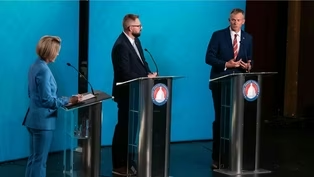
Utah 2nd Congressional District 2026 General Election Debate
Video has Closed Captions
Candidates for Utah's 2nd Congressional District in the 2026 General Election debate the issues. (56m 21s)

Utah 4th Congressional District 2026 General Election Debate
Video has Closed Captions
Candidates for Utah's 4th Congressional District in the 2026 General Election debate the issues. (56m 15s)
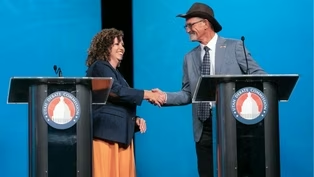
Utah 3rd Congressional District 2026 General Election Debate
Video has Closed Captions
Candidates for Utah's 3rd Congressional District in the 2026 General Election debate the issues. (56m 15s)
Providing Support for PBS.org
Learn Moreabout PBS online sponsorship(cheerful music) - From the campus of Salt Lake Community College in Salt Lake City, the Utah Debate Commission welcomes you to the general election debate for Utah's 1st congressional district.
(cheerful music) Welcome.
I'm Natalie Gochnour, moderator for this exchange.
And on behalf of the Utah Debate Commission, thank you for joining us.
(audience applauding) Today, we'll hear from two candidates who qualified for this debate in the race to represent Utah's 1st congressional district.
The candidates are Riley Owen and Ben McAdams.
We look forward to an engaging and civil discussion, with the goal of helping Utah voters make informed decisions.
Candidates will each receive one minute to answer questions, with up to 30 seconds for rebuttals at my discretion.
A random drawing held prior to the debate determined that candidate Owen will get the initial response to the first question.
We will then alternate turn on the remaining questions.
Now, let's begin.
Mr.
Owen, we're gonna go to you for a one-minute opening statement.
- Thanks, Natalie.
It's good to see you again.
And thank you to the Utah Debate Commission and Salt Lake Community College for hosting us tonight.
I'm joined by friends and family, and most importantly, my fiance.
We recently got engaged, and she's been a rock and a refuge to me throughout this campaign.
And as she and I look at each other, we're asking ourselves the same questions that many of you are asking.
How will we feed a family or afford a home?
Is corruption normal?
Will AI take our jobs and natural resources?
Clearly, what we've been doing hasn't given Americans comforting answers to these questions.
That's why we need new faces and new ideas.
I'm not a career politician.
I'm one of the first Gen Z conservative congressional nominees in the country.
I've taken an oath to protect and defend our Constitution twice, once as an intelligence officer in the Navy Reserve, still serving, and a second time as a White House staffer during COVID-19, saving American lives and creating American jobs.
And I'd be honored to take that oath a third time, to represent not a party and not a president, but to fight for the Utahns of our 1st congressional district.
Thank you.
- [Natalie] Mr.
McAdams, one minute for your opening comment.
- Thank you.
I've never been more worried about the direction of the country than I am right now.
People are hurting, they're working harder than ever, and not sure how they're gonna put gas in the tank, whether they can put food on the table tomorrow, and whether they can pay rent at the end of the month.
And yet, we've never been more divided than we are right now.
Corruption is not the exception, it is the rule.
We are entangled in wars that have no reason and no end in sight.
And the Constitution, the one thing that's meant to hold it all together, no matter who's in power, is being challenged in ways I never imagined.
This doesn't get solved by who yells the loudest or who promises the most.
It takes courage to work across differences.
And I know because I've done it, I've passed critical legislation.
I've solved tough problems.
I've stood up to corruption.
I've stood up for you, not for the credit, but because it makes lives better of the people who are counting on me.
Now, more than ever, we need representatives who will do what's right, even when it's hard.
- Mr.
McAdams, we're gonna stay with you.
And I wanna set the tone for this debate by just asking a question about polarization and dignity in public life.
It's been five years or so since you were in public office last.
I think contempt has gotten worse.
And wanna ask you what you can do personally to lower the temperature and create greater dignity in civil society?
- Yeah, I think people look at their representatives and how we act in the public sphere.
And I've always believed that legislation becomes better if you listen to somebody who disagrees with you.
Look, we talk about the lack of courage in politics today.
And for sure, we need leaders who will stand up and will do what's right, and I've done that.
In my political career, I've never been afraid to stand up and stand alone.
As the sole Democrat in Utah's delegation when I served before, there was many a times that I cast the sole vote supporting Utah's public lands, voting to impeach a corrupt president when he had violated his oath of office.
But courage is not only standing up and standing alone.
Courage is the ability to sit down at a table with people you disagree with, people you may not like, and listening to them, because you know that the people who are counting on you, they don't care who you like, they care what actually changes.
And so they need solutions, and it takes courage to work across differences.
And I've done that in my public service, and I'm hoping to do it again.
- [Natalie] Mr.
Owen, what can you do to reduce the temperature and create greater dignity in public life?
- So as an intelligence officer in the Navy Reserve, when I put a uniform on and when sailors that I lead put a uniform on, it doesn't matter where you come from or who you love or what your politics are.
In fact, we don't talk politics in uniform.
We drive towards a common mission.
And that's a luxury when we're in uniform, serving in the military.
In the political sphere, obviously, we're gonna disagree with things.
One of the things that I think is driving so much of our contempt and polarization in society is social media.
I wanna put an age verification requirement at 16 and up on social media.
I think it's addicting so many young people.
The average teenager spends about 30, 35 hours a week on social media.
And this isn't just an issue for our young people.
They're gonna be the ones on debate stages like this in a decade or so from now, hopefully.
They're the future leaders and CEOs and people who start businesses, but our algorithms are addicting and dividing us and spreading this contempt.
And so that's one of the first pieces of legislation that I wanna put forward if elected, is to reduce the polarization and curb Big Tech's influence on our young people.
- Great.
Okay, Mr.
Owen, we're gonna stay with you and go to a topic that's near and dear to my heart.
We're gonna talk about the economy for a minute here.
Voters are consistently mentioning affordability and inflation as top concerns.
Right now in Utah, we have over 64,000 unemployed Utahns.
And in the last 12 months, we've lost 2,300 tech jobs.
So as a member of Congress, what specific policies would you do, would you support, to bring down the price of gasoline and to lower the cost of household goods?
- I think this is far and away the most important issue of this campaign.
And Natalie, you'll have to forgive me.
I don't have a PhD in economics, so forgive any weakness in this answer, but there's a few things.
We need to tackle affordable housing, and I wanna make it a lot more affordable to raise families.
When it comes to affordable housing, we need to introduce more supply into this, expanding things like the Low-Income Housing Tax Credit to build more developments that help low-income individuals to have housing.
We need to get institutional investors out of the housing supply.
Congress passed some legislation earlier this year.
It was relatively toothless in restoring some of that supply back to the market.
But it's also families who are struggling at the pump and struggling to even decide, "Can we afford another child?"
That's why I wanna fight for expanding the business tax credit to those businesses who are offering paid maternity leave to their employees.
People shouldn't be choosing whether or not they can have another kid, or they need to stay at work to keep getting that paycheck.
So I wanna create market-based incentives to help lower the cost of raising families and to make housing more affordable for every Utahn.
- [Natalie] Mr.
McAdams, policies that you would support to bring down the price of gasoline and household goods?
- Yeah, thank you, Natalie.
With all due respect, I don't think it takes a PhD in economics to understand that this ill-begotten war has driven up the cost of gasoline, it's driven up the cost of food, this unconstitutional war.
And so the first thing we should do is get out of endless wars that President Trump promised would not happen, and we will see the cost of gasoline come down immediately as we restore order on the global stage.
But it doesn't just stop there.
It's these tariffs that have driven no consistent US policy, that's also driving up the cost.
It's essentially a tax on American households that's driving up the cost.
So we can stop with the self-inflicted wounds to begin with, but after that, we do need to bring down the cost of housing.
And I've spent the last five years working on housing solutions as a member of the National Housing Crisis Task Force.
Already in this campaign, I've convened a panel of housing experts to search for solutions, because, look, I want my kids and your kids to be able to afford a home living in this great place, and, you know, and we can do it.
- Mr.
McAdams, let's turn to the Federal Reserve.
As you know, it's our central bank, controls our money supply.
We just had a rate hike, and it looks like more may be in store to try and get on top of inflation, which remains above target.
Did you agree with the Fed's decision, unanimous decision, to raise interest rates?
And what's the proper role of Congress when you disagree with the Fed?
- Look, I believe in a strong and independent Federal Reserve.
These are the experts that we put in charge of having independent judgment to regulate the supply of cash in the economy that impacts the interest rates that affect every one of us.
And the more that those decisions by the Federal Reserve are driven by politics and the efforts of any president to dictate an outcome, what we're seeing is, you know, even as this administration has tried to bring down in interest rates, what we're seeing is markets respond.
The 10-year yield on bonds is creeping up, no matter what this administration does.
That's affecting mortgage interest rates.
It's affecting credit card rates.
It's affecting everything that impacts the daily cost to American families.
And so once again, politics needs to stay out of the Federal Reserve, have an independent body, nonpartisan, or comprised of both Republicans and Democrats, and trust them to make decisions that will keep our economy stable and avoid the volatility that we've seen over the last year.
- Okay.
Mr.
Owen, it's a two-part question.
Did you agree with the Fed's decision to raise interest rates?
And what do you do when you disagree with the Fed if you're a member of Congress?
- Yeah, first and foremost, I do think the economy's getting hot.
And what the Fed decided to do, they are independent, I fully support the independence of the Fed.
That's one of the core functions of that, is so that they can make decisions that might be politically unpopular, that might be at difficult times, right before an election perhaps, to cool down the economy.
What can I do in Congress when I disagree with one of those decisions?
Well, you can pass and fight for legislation that helps Americans who are struggling if rates may go higher to figure out how they can pay their bills, how they can pay their mortgage, and how they can put food on the table.
I was raised by an accountant.
Growing up, I wasn't allowed to go through a drive-through with my dad unless I flipped through the folder of coupons that he had clipped from the Saturday paper.
It's really frustrating as a kid, but as an adult, I get it.
I'm really grateful for that, and I appreciate it.
And I think one of the things that Congress needs to do is to get our spending under control.
And I'd support a balanced budget amendment.
I think, too often, politicians are spending into oblivion, and ordinary people like you and I are left footing the bill.
- Mr.
Owen, one more economic question, and then we'll move on.
We'll start with you, and then go to Mr.
McAdams.
Where do you stand on tariffs?
I mean, it was mentioned by Mr.
McAdams that they've been unpredictable and off and on, and created a bit of uncertainty, but where do you stand with your party when it comes to tariffs?
- I think free trade is what's most efficient for businesses and consumers at the end of the day.
There's some disagreement out there, but I think it's plain and simple, that free trade is best for everyone.
Now, tariffs can be a tool of economic statecraft to try and punish bad actors who don't have reciprocal and fair relationships with the United States.
And so my approach is, I wanna evaluate the effectiveness of a tariff by asking a few questions.
Is it actually helping American workers get employed?
Is it helping investment come to American businesses?
I don't think we should be levying tariffs just to make foreign goods more expensive.
I think tariffs may have a time and a place, when it's helping America be more competitive on the global stage.
But make no mistake, tariffs are most often paid by the importers, and that gets passed on to individuals and businesses, like you and I, and we're all feeling it.
And the unfortunate reality is that if we're going to have structural change to bring manufacturing jobs to the US again, to eliminate some critical dependencies on foreign suppliers and foreign nations, there are short-term effects.
But I'm optimistic that with tactical, tailored tariffs, we can see some industries revive and create more American jobs, but it's painful, and we need to have other legislation, paired with deregulation, permitting reform, job training, at the same time as implementing these tariffs.
- Mr.
McAdams, you've already referenced tariffs.
Is there anything that you disagree with with what Mr.
Owen has said, or how would you- - Yeah, I think I largely agree.
I think what we've seen is haphazard tariffs that have not been driving at any, really, policy goal.
It seems that they've been ego- and vengeance-driven, and not focused on, you know, shoring up key segments of the US economy.
Tariffs have their place.
If there are things like chips that we wanna onshore to shore up the supply chain, critical services that we need to bring into the US, that has not been what's happened.
And, you know, this is not, again, as complicated as we like to make it.
President has certainly been driving tariffs, creating volatility in the market, and driving tariffs on a whim.
Congress has tools, and they can rein in the president, and they can override the tariffs.
So part of my concern is that we have a Congress that has not exercised independence, not done their constitutional duty and reined in this president.
And so we can talk all we want about the failure of the tariff policy, but I wanna see a Congress that will do their duty to rein in a president who is abusing that power.
- Mr.
McAdams, let's turn to artificial intelligence.
Today, our president met with US tech leaders in the Oval Office.
Many tech leaders, many Americans, many Utahns are concerned about the dangers of AI.
They also have some optimism.
What concerns do you have?
And where do you stand on the risks and benefits of AI?
- Look, anytime the makers of AI are talking about a 10% risk of annihilation of humanity, I think that's something we should take pretty serious.
But I will tell you, and the federal government and this administration has not taken it seriously, and Congress has not done its job.
But I'll tell you what else, is we have 100% certainty that AI will transform and disrupt our economy.
Now, maybe in some good ways, maybe we will find cures to diseases and cures for cancer, but I think there is a certainty of incredible disruption.
And this is a time where we need to decide, this is a choice that will be made, who's gonna benefit from this disruptive technology, tech bros and billionaires?
Are we gonna make sure that the benefits accrue to the American people, that standard of living is better, health is better, working conditions are better?
That is a choice that we need our governments to make.
And failing to make a choice, as we've seen over the last two years, is a choice.
- [Natalie] So, Mr.
Owen, has Congress not done its job?
Where do you stand on the risks and benefits?
What concerns do you have?
- I don't think we're talking about this enough.
And I think this is the single issue that will have the greatest impact on Americans for decades to come.
As Ben mentioned, it is going to fully restructure our economy, and it is critical that we get this right and that we adopt this technology in a way that doesn't leave large portions of our society behind.
I believe government's number one responsibility is to protect its people.
And right now, AI is developing at rapid paces, and there's a lot of things that Congress and government should be intervening in.
Deepfakes, for example, creating likenessness and representation of you and your kids without your consent, collecting your data and selling it to Big Tech to train these models on you, your behaviors, your personalities without you knowing.
My approach is, if we're using AI for more and more important purposes, like when it comes to water treatment facilities or military use cases, there should be more regulation, but we should regulate the risk, not the innovation.
But my concern is that Big Tech has grown powerful, and it is buying off our politicians, like the Think Big PAC, that has put $1.1 million behind Ben and other politicians, asking them not to regulate AI.
That's concerning to me.
And I want big money out of politics, and that's why I oppose Citizens United.
- That's great.
I thank you for watching the time on that.
We'll stay with you, Mr.
Owen.
Do you see the federal government as having the main role here or states?
- And this is a really big tension, especially as a conservative, we talk about limited government, but AI has everything to do with national security, with our national health as an economy.
And so I understand the balance of we need to get this right.
And frankly, we can't afford to fall behind when countries like China, who don't believe in fair elections and free markets in the same way, who don't believe in freedom of speech and religious freedom, or have environmental and labor protections, if they get ahead of us in this AI race, AI will change the way we fight wars, the way our students learn, the way we interact with each other in our communities.
I don't wanna live in a world driven by those norms that our adversaries lead with, and that the CCP oppresses its own people with.
And I have great respect and admiration for the Chinese people, but that's what they live under.
It is critical that we get this right.
And as I mentioned before, we should regulate the risk, but not the innovation.
I've been to the battlefields of Ukraine, helping them develop the technologies needed to protect their borders, just like we care about our own borders.
AI is going to be everywhere, and we're not talking about it enough.
And I believe the federal government has a vested interest in making sure we stay competitive.
- Mr.
McAdams, federal standards, or should the states lead here?
- This is something that's gonna be hard to regulate on a 50-state basis, or, you know, we need a strong federal standard, strong federal guardrails that are gonna protect us from the harms of AI and make sure that any economic disruption does not hurt the American people, does not result in the enriching of billionaires and trillionaires, but helps to lift every American.
I don't think it can be done at the state level, but if the federal government fails to step in and to do its job, then I understand why the states feel compelled to do that.
- Mr.
McAdams, we'll stay with you.
AI has an inseparable link to data centers, and the debate about data centers continues to heat up.
There's public concerns about water, noise, power consumption, tax breaks.
At the same time, most of us use AI every day, and there are some very real national security issues.
So what should voters in the 1st congressional district know about your approach to additional data center development in Utah?
- Yeah, look, I understand that the technology infrastructure of the future is being built.
That doesn't mean it has to be built everywhere and that we have to give a blank check to anyone.
Look, data centers in the Great Salt Lake Watershed need to be held to a higher standard.
We need to make sure that they are not only neutral as to water, but they're delivering a return of water back to the Great Salt Lake.
This is existential for us.
This is about the air we breathe and the place we call home.
I also believe that data centers don't need massive government handouts to make them happen.
This is technology that's being built with or without government support.
When I was the mayor of Salt Lake County, I led the charge to stop a data center in West Jordan, and I did it because of the impacts that the water use would have on a desert and because of the $200 million tax incentive that was put on the table, and I led the charge to stop it, and we did stop it.
So as this technology infrastructure is being built out, we need to make sure that it's done in a way that minimizes reliance on fossil fuels, relies on clean and renewable energy, doesn't use water in the Great Salt Lake Watershed, and is done in a responsible way.
- Mr.
Owen, what do the voters in the 1st congressional district need to know about your approach to data centers?
- We have 3,000 data centers nationwide, with 1,500 more in development over the course of the next year.
That's gonna cost about $1.5 trillion nationwide.
My message to developers of data centers is very simple.
Pay your taxes, be water-positive, be carbon-negative, don't ruin the grid, and don't ruin our lands.
And my message to Utahns is also very simple.
Your voice matters as we figure out where this infrastructure needs to go to make sure that we stay competitive and that we protect our natural resources.
Candidly, earlier this year, with the proposal of the Stratos Data Center project, I was heartened to see a lot of Utahns speaking up and getting involved.
That's how this republic has worked for 250 years.
And the process was changed because of that citizen voice.
I'm optimistic that data centers can be more efficient.
Initially, they started with evaporative cooling.
Now, they're starting to have closed systems.
There's some corporate responsibility, with some data center developers saying they'll have their own substations now, so it's not going to tax the grid, but I wanna fight for individuals and families, that they shouldn't be burdened with the costs of businesses coming in and making a buck in their backyard.
- Mr.
Owen, all of these issues are connected in some way, and I wanna turn to our inland salty sea, the Great Salt Lake.
Do you think that the current administration, Governor Cox and legislative leaders, have done enough to help restore this lake that's important to our health, to our ecology, to our economy, to our land?
- No, and that's not a knock on them.
I think they'd be saying the same thing.
There's so much more that we need to do.
We recently just got a great new commissioner for the Great Salt Lake, Hannah Fries.
Many of you probably saw her suggestions for how we can do more for the Great Salt Lake in an article recently.
I believe that we make the best policy by empowering the people who know these issues best.
As congressmen, we can do our best to learn as much as we can about all sorts of issues, but we can't be an expert in everything.
And that's why my first step would be to rely on the scientists and researchers who have been dealing with this for decades.
And Commissioner Fries has several examples and things that she'd point to of how we can do better.
Number one is infrastructure investments to ease the flow of water in the Great Salt Lake from areas like the Newfoundland Basin, removing water-intensive, invasive species like Phragmites to restore more water to the lake, and creating water markets, not regulated, forced buybacks, but leases from willing users who are willing to sell that back into the lake, but payment should be measured on water that actually gets back into the lake.
But there's so much more that we can be doing.
And I'm heartened to see that this has become such a bipartisan issue.
- Mr.
McAdams, I'll have more questions on Great Salt Lake, but this first one is, has Governor Cox and legislative leaders done enough?
- Not by a mile.
There is no issue more important to the future of Utah than the air we breathe, the place we call home, than saving this lake.
And make no mistake, it is already costing us.
I hear about people who are moving, people who will not move here, companies that are not coming here.
You know, at the same time, we give up tax incentives to bring in data centers.
I oppose the Stratos Data Center because, look, if we wanna save the lake, we have to do more than lip service and half measures.
We have to step up.
We have to make hard choices.
We have to stop those things that are gonna impact the lake negatively, and we have to make hard choices to solve it.
I'm working on legislation that, if I'm elected, I hope to introduce, that I think can meaningfully get more water to the lake, because, ultimately, this is a choice, and it's a choice that we have to make consciously.
And I think it's a choice... The lake is solvable, it requires us to make a commitment and to make some hard choices, but this is not like putting man on Mars.
We can save this lake, and we can ensure a bright future for the people of Utah.
- Mr.
McAdams, on the Great Salt Lake, can you help define the federal role on solutions for the lake?
- Yeah.
Yeah.
I actually have a great idea, but I'm still working on it.
I'd love to talk about more about it as we get it refined.
But first of all, water issues are not new to the federal government.
We are seeing this not only in Utah and with the Great Salt Lake, but the Colorado River and across the West, as drought has plagued the West.
I think the first role of the federal government is to step up with funding, because, again, the water is here, the water is just not making it to the lake.
Part of what we're seeing is weather, that is, you know, as we have less precipitation, partially driven by climate change, we just have less precipitation.
But really, people will tell you that, really, 80% of the problem with the Great Salt Lake is just simply that we are growing and diverting water that used to flow into the lake, and it's getting diverted to other purposes.
So yes, the federal government does have a role, stepping up and helping to acquire the water rights and the water conservation that can get water to the lake, and then making sure that this population, critical population, doesn't suffer the disastrous health consequences that we know could happen if we do nothing.
- Yeah.
Mr.
Owen, how would you define the federal role?
- Very similarly.
Funding, first and foremost.
But as I've been holding town halls across the district, even some conservatives get frustrated, saying, "Climate, why do we care about that?"
And what I say to them is, "If we don't fix this, it's not a question of if we save the lake, it's a question of who does it?
Now, do you want people from the federal government coming in and telling us what we can and can't do with our lands, restricting our own local access, and then having us foot the bill for it?
That's not a conservative principle now, is it?"
And it changes their mind pretty quickly.
So to me, it's not a question of if, but who?
And I want us at the local level to be able to get involved and fix it with a lot of the solutions that we've been discussing.
But as mentioned, the role comes in with funding.
There's a billion dollars that President Trump has requested.
Representative Maloy has been very honest about the political realities, that that money might not come in whole or as fast as we'd like it.
And experts like yourself and Josh Romney, who are engaged on this issue, have estimated anywhere from three to five billion is needed for this lake.
There's a lot more work to do.
- Yeah.
Mr.
Owen, let's turn to energy.
I've already mentioned how interconnected all of these are.
Utah's economy and energy system rely heavily on fossil fuels, natural gas, and coal, and yet Utah has this abundance of non-renewables, solar and geothermal.
What is the federal government's role in energy development here in Utah?
- I think the federal government should be prioritizing energy independence and reducing foreign dependencies.
And we're seeing this right now with the Strait of Hormuz and gas prices around the world, and shocks, but there's other forms of energy.
In Utah, a lot of people talk about an all-of-the-above approach, and that's the same that I take.
I wanna be pursuing every avenue possible, not needlessly shutting off different outlets and avenues for us to lower energy prices for every Utahn.
I don't want it to be official policy of the federal government to raise the price of fossil fuels.
Do I wanna move more quickly to renewables and more sustainable forms?
Absolutely, but I wanna do that with market-based solutions and incentives.
And Natalie, you mentioned geothermal, hot dry rock geothermal.
I'd also add small modular reactors and nuclear.
There's a company right here in Utah that's made great strides.
I wanna take this all-of-the-above approach.
And as we talk about things like data centers straining our grids and resources, if we figure out this renewables puzzle, as you mentioned, it's all interconnected, and we can grow and develop without putting additional costs on Utah families and individuals already spread thin.
- [Natalie] Mr.
McAdams, the federal government's role in energy development here in Utah, and then we'll come back to you on the nuclear question.
- Thank you.
Again, we don't need to overcomplicate this.
Fossil fuels are already more expensive than solar.
We need the federal government and President Trump to stop throwing a wrench in the projects that are permitted.
They are being built, and we just need the federal government to get out of the way.
That is not what we're seeing.
When I was in Congress, I ran legislation.
And look, I don't know that we even need to raise the prices of fossil fuels.
We need to stop subsidizing them.
When I was in Congress, I ran legislation to increase the lease extraction rates from oil and gas extraction on federal lands.
That lease rate had not been updated since the 1930s.
And so I said they should at least pay a current rate, should be updated to at least the State of Utah's lease rate.
Let's not give them a subsidy to be pulling oil and gas out of our federal land.
So let clean energy, like the Fervo and FORGE project in Millard County, geothermal, solar, these projects can move forward.
Federal government should have a role, I think first get out of the way, and then I think the federal government has a role in transmission and making sure that where clean and renewable energy is abundant, that it has the ability to get transmitted to the places that need it.
- So, Mr.
McAdams, I toured the small modular nuclear reactor plant in Emery County a couple weeks ago.
It's impressive, and Utah continues to attract significant investment and interest in nuclear energy technologies.
Do you believe that nuclear should play a larger and larger role in meeting Utah's energy needs?
- Yeah, I don't know that nuclear energy scares me.
I just think we've over-indexed in what it can mean for the future of Utah.
These projects take years to permit.
And look, we already know, I think we have the solutions that can work for Utah.
It's solar, it's wind, it's geothermal.
These projects work, they pencil.
And if the federal government and state government would support these projects, we can deploy massive energy generation and then energy storage right here in Utah.
So I think I'd love to see the market compete on nuclear and see if that's a solution that's viable.
I'm not convinced that it is viable, but I think we do know what is viable, what's safe, what is minimally impactful on the State of Utah, and that's solar, wind, and geothermal.
- [Natalie] Mr.
Owen, comment on nuclear and its role in Utah's energy future.
- I do.
And I think this is a great area in which we can fight for more permitting reform and to have mandated deadlines of when projects can have responses and solutions, so that developers and projects don't sit in limbo for years on end.
Look, as a naval officer myself, the Navy's been putting small nuclear reactors on submarines and aircraft carriers for decades.
They figured out how to do it.
When we really want to do something and when we have an energy need, and we have businesses and people innovating right here in Utah, I think we should encourage that.
And as Ben said, government should get out of the way, but it should also make it even easier for what's already there for a business to move forward, get the permits.
That doesn't mean skipping EIAs and EISs, and stepping on public lands and environmental issues, but it means that we can permit things faster and innovate and build things.
- We've now reached the halfway point of the debate featuring candidates in the race to represent Utah's 1st congressional district.
If you're just joining us, I'm Natalie Gochnour.
I'm moderator for this presentation of the Utah Debate Commission.
We're coming to you from the South City Campus of Salt Lake Community College in Salt Lake City.
Let's get back to the questions, and I'll go to you first, Mr.
Owen, to talk about the federal debt.
You knew it was coming.
Where do we start here?
Utah has this stellar fiscal record.
We have a balanced budget, AAA bond rating from all the major crediting agencies, budget reserve accounts, a line-item veto, and our country has none of these.
(chuckles) And the national debt now exceeds $40 trillion.
That's approximately $286,000 for every taxpayer in our country.
And the outlook's not good, as spending on defense, Social Security, Medicare, infrastructure, interest payments on the debt.
I wanna push you to name one specific spending reduction or revenue increase that you would support, even if it's politically unpopular.
- The question is, where would I cut spending?
- [Natalie] Or you could raise revenue.
- Sure.
(Natalie laughs) As an intelligence officer in the Navy Reserve, I wanna be clear, all my views are my own and don't represent those of the Department of the Navy or the Department of War, but there's 18 different intelligence agencies.
That's a lot.
And we spend hundreds of billions of dollars on intelligence right now.
I think we can streamline that.
We can eliminate waste, fraud, and abuse, even with legal purposes, and good, important national security missions.
I believe in the defense of our nation, but having 18 different agencies coordinate the information to give to decision-makers, I don't think, sounds very efficient.
Instead, we could streamline it to have an international-oriented intelligence group and a domestic-oriented group and a military-oriented group.
That's an area where we can streamline spending.
But as I mentioned earlier, I want a balanced budget amendment, as we see in other countries like Germany and Singapore.
Right now, we pay about $1 trillion every year in interest payments.
That's 14% of our spending.
It's not sustainable.
And another way to cut spending would be to introduce AI, not to cut services, but to deliver services more efficiently, to eliminate waste, fraud, and abuse, and improve Americans' experience interacting with their government.
Today, america.gov was announced.
I'm still learning about it.
I went online, maybe some of you looked at it, but it's proposing to help Americans, when they need government services, to know where to go, and to make it far easier to apply for the programs and get what they need.
It's a start, and let's see where it goes.
- I'll cut you off there, but I did not hear you mention anything with entitlement reforms.
And I just wanna press you on that, and then I'll do the same with Mr.
McAdams.
Do you have any part of your posture that would take on mandatory entitlement reform?
- I think where they are with legislation that was enacted in recent years, I'm happy with where it is right now.
- Okay.
Okay, Mr.
McAdams, it's the same question.
What's one specific spending reduction or revenue increase that you would support, even if it's politically unpopular?
- Yeah, I support balancing the budget as well.
And I know, as a mayor, you know, I had to make hard decisions to live within our means, and I think the federal government should live within its means too.
I find it sad, though, that when we talk about balancing the budget, the first place we go is trying to balance it on the backs of hardworking people, and the notion that we would break our promises to people who are counting on us, Social Security.
We saw in the Big Beautiful Bill, they put the healthcare of 180,000 Utahns on the chopping block to do it almost a one-for-one, cutting SNAP and cutting Medicaid and other health benefits, and then a one-for-one tax break for billionaires and corporations.
Once again, this is a choice, and the choice is being made, I think, by corrupt people who have rigged the system for their own benefit.
I grew up in a family, my mom raised six kids on a school teacher's salary.
We lived on the edge financially.
I remember times as a kid that the power was shut off because we couldn't pay our bills, that our home was in foreclosure.
Look, I know I'm out of time, but let me just say I think there are ways to do this.
First of all, it'd be rolling back the tax cuts for billionaires and corporations that passed in the Big Beautiful Bill.
We can save Social Security.
This is not impossible.
The Scrap the Cap concept that would stabilize Social Security through 2091.
These are decisions.
They're decisions- - You're at time- - To be made by people.
- Mr.
McAdams.
Okay, Mr.
Owen, it looks like you had a rebuttal there.
- Yeah, I wanna be really clear with what recent changes actually did with Medicaid and SNAP especially.
If you're trying to improve your life, either through getting educated, working, job training, or volunteering in your community, then you can and should get the help that you need.
And if you can't do that, there are exemptions.
If you're pregnant, recently gave birth, have young kids at home, then that doesn't apply to you.
This is government using scarce resources to help those most in need.
In that legislation, every single tax bracket got a cut, every single taxpayer.
And the average tax savings for a taxpayer in Utah, excuse me, Salt Lake County, $3,842, with the increase in the standard deduction, child deduction, tax on tips.
I don't know about you, Ben, but that's a lot of money, that's a lot of meals on the table, and that's several months of rent and mortgage for Utahns.
- We'll cut it off there.
- Can I just say- - Do you wanna take a 30-minute- - Yeah.
- Or 30-second rebuttal?
- I support middle-class tax relief and tax relief for low-income individuals.
And that bill had a little bit of that.
But what you saw in that bill was, as we maybe cut taxes on low- and middle-income families, we also increased their cost, and passed that, and those savings went to billionaires and corporations.
What we've done with Medicaid is, we've created a maze, and then we play gotcha for people who get lost in the maze through complicated paperwork.
This administration has cut Utah's Targeted Adult Medicaid program that has been a lifeline for so many people to get stabilized and to get back into society.
This is a bipartisan reform, the Targeted Adult Medicaid, that has helped so many people, and they've cut it, and they've told us simply they're just trying to reduce the Medicaid rolls.
- Ben, can I just ask, what happened to the party of Bill Clinton?
Work requirements were a hallmark of the welfare programs there, and Democrats lined up to support that.
I don't think it's unreasonable, and I agree, it's a maze.
And we need to make it easier for people to apply for the help and the care that they need.
But I don't find this unreasonable.
And the Democrat Party used to stand for this, and I don't know what changed.
- Yeah, what changed is, they're not in trying to get people healthcare and get back to work.
They're trying to create a maze for the simple purpose of getting them off the Medicaid rolls, of passing costs onto regular people, so they can afford a tax cut to billionaires.
- So if it were easier to navigate this maze, would you be opposed to work requirements?
- Look, I think any policy... Look, people are working.
I know many people who are on Medicaid, they are working.
That's what the Targeted- - And they'll still get the care- - And the Targeted- - They need at work.
- Adult Medicaid looked at how we help people get back to work and get back on their feet.
That program works.
It was cut, and it is encouraging people to get back to work.
I'm happy to talk about that, but that's not what happened in this bill.
- I think we can agree that we need to make the maze easier for people to navigate.
- Mr.
McAdams, let's turn this to Social Security.
And I wanna put a little bit of a local face on it.
I do a lot of demographic work.
Utah's population's aging fast.
Right now, we have one in eight are 65 and older in our state.
Over the planning horizon, that will go to nearly one in four.
And of course, our Social Security system is expected to go broke before we host the next Olympic Games here in 2034.
It's right around the corner.
This would affect 71 million citizens.
What do you propose to help maintain that program?
And what can a freshman in Congress do?
And do they call you a freshman if you would return?
- Sophomore.
- A sophomore, okay.
(all laughing) - I'd be the freshman, Natalie.
- Yeah.
- Gotcha.
But what would you do?
What's your proposal to take this program that is such an important safety net for seniors?
- Yeah, I talk to young people, who say, "Look, I just don't care about Social Security because it's not gonna be there when I need it."
That is wrong because we know from history what the alternative is.
That is, if you're lucky enough, you're moving in with your kids.
Otherwise, you are living in a shelter, you're living on the street.
And I believe Social Security is a core social safety net program that moved this country forward and is worth protecting.
And we also know that it's not impossible to save it.
There are proposals to do that.
So right now, and everybody probably sees in their paycheck that you have a Social Security deduction from your paycheck, that deduction phases out when your income passes $184,000, and you no longer have to pay that.
The Scrap the Cap concept would reimpose a Social Security paycheck at income above $350,000.
And this proposal that was supported by President Biden, what it would do, it would stabilize the Social Security Trust Fund through the year 2091.
This is an easy solution.
We just have to have the courage to do it and to stand up for people to protect this social safety net program that's been important to so many Americans for almost a hundred years.
- Mr.
Owen, your proposal to maintain the Social Security program.
And what can a freshman do?
(audience laughing) - I don't wanna raise taxes like Ben proposed to save Social Security.
It's a hard issue.
There's a few different things you could do.
You could raise the retirement age, you could raise taxes, or you could reduce benefits.
I don't wanna do any of that, but I wanna be very clear how Social Security's funded.
On your paycheck, 6.2%, you pay that as an employee, and your employer matches that 6.2%.
And that funds 80% of the Social Security benefit, but it's that extra 20% that we're talking about that might go bankrupt.
So worst-case scenario, you're getting 80% of the benefits you were originally entitled to, but that's not good enough for me.
You need 100%, because Utahn families are struggling.
My proposal is, if we were to invest Social Security into the stock market, where growth is higher, yes, risk is higher, but a lot of other pensions do this, and they're far more solvent.
There is more risk, but over time, there's far, far more growth.
And I don't think we'd be in this challenge, and I don't think we need to raise taxes even more.
- Okay, we're gonna turn now to a student, Salt Lake Community College student, Tehran, no, Lily Tehran.
Lily, you're up.
- My question is about Pell Grants.
Pell Grants help thousands of students in Utah's 1st district attend college.
With the program facing a projected funding shortfall, should Congress increase spending to maintain current benefits, or should it reduce award levels or eligibility?
What specific action would you both vote for?
- I'm gonna go to you first, Mr.
Owen, on Pell Grants and education funding.
- Yeah, I think education is our future.
And as one of the first Gen Z congressional nominees in the country, I understand this.
I'm closest to having just gone through college myself.
It's not easy.
And I had to find different scholarship schemes and get support myself.
I think Pell Grants are a great way where students can get support, but I also wanna emphasize that there are alternatives to two- and three-, four-year degrees.
And especially with AI changing the economy and changing the landscape, there are a lot of other ways where you can get educated and you can be prepared to enter society without having to go into debt and rely on government grants to get through school.
But I think everyone who wants to pursue an education should.
I think that's the key and the core to a healthy and vibrant society, and I wanna support that.
- [Natalie] Mr.
McAdams?
- Yeah, I talked about I grew up in a household where we didn't have a lot of money.
We had a lot of financial insecurity.
I lived at home and commuted to the University of Utah.
I worked two and three jobs at times to help to pay for college.
It still would not have been possible for me to go to college were it not for Pell Grants and the Stafford-subsidized student loans.
I am so grateful for that open door that allowed me to pursue a college education and to provide for my kids financial security that I didn't know as a kid.
So I strongly support a Pell Grant, because I know, like, it's not gonna solve the entire challenge with the cost of education.
We have to bring down the cost of college.
We also, I think, have to look at alternatives to college.
I don't know that college is the only path that a student should consider.
Other upskilling and training is also important.
So I support Pell eligibility for other types of workforce training.
And then, again, bringing down the cost of college, so that somebody should be able to go to college if that's what they choose.
That's good for the country, and that should be a choice that's available to every young person.
- Mr.
McAdams, before we go on and talk about foreign policy, I wanna talk to you just for a second, or learn from you about Congress as an institution.
Many American people feel that Congress is not solving problems, not preventing problems, not doing its part, filled with career politicians that don't account to the people.
What ideas do you have that would help reform Congress and be about the people's business?
- Yeah, again, I think these are solvable problems.
Congress has never been more divided in my lifetime.
I think there are numerous things that are the root of the corruption of Congress and the frustration with its inability to actually rise to the challenges and to solve problems.
And we have incredible challenges today that we need them to rise to.
At the crux of it, I would put gerrymandering, where politicians win or lose their election by catering to extremes.
And we now live in a climate that if you work across the aisle, it is to your own peril.
And we've seen that here in Utah, that, you know, when I served before, I represented a district that had been gerrymandered to make it unwinnable.
I won it.
And after I represented it, it was further gerrymandered to make it even more unwinnable.
Thanks to Better Boundaries, voters have a chance now to choose their elected officials rather than politicians dictating the outcome of an election.
And we've seen the legislature's reaction to this.
They don't like that voters have the ability to choose their elected officials, but what happens is, you have a Congress that is responsive to voters rather than to corrupting influences and power.
- Mr.
Owen, let's hear your ideas for reforming Congress.
And as you do that, I want you to specifically address gerrymandering, since Mr.
McAdams did.
- Sure.
I think the problem lies first with what's going on in Congress.
There are a lot of things that I wanna fix.
I think we need term limits, both in the House and in the Senate.
I wanna make it illegal for not just members, but their staffers and senior government officials to trade in individual stocks.
They shouldn't be going to Washington, and then getting rich, as average Americans struggle to make ends meet.
And it shouldn't just be the stock market, they should be banned from prediction markets as well.
If you have wealth over a million dollars, that should be forced to sit in a blind trust while you're serving the public.
You shouldn't be making decisions on your personal financial fortune that you're trying to build.
I think, also, there's a lot of members of Congress in the news in the past year that have been away from their jobs for months at a time, and the public hasn't known if they're even alive.
That's wrong.
If ordinary people like you or I did that at our jobs, we'd be fired with near immediacy.
So they need to notify the public if they're incapacitated, or for whatever reason it is, if they're not showing up, the public needs to know.
And last but not least, I wanna overturn Citizens United.
I'm tired of politicians being bought off by corporate PACs, and they have a laundry list of favors to pay out when they get into office, or they're bridled and muzzled, and can't actually fight for their constituents because it would conflict with their donors.
- [Natalie] And gerrymandering and Better Boundaries?
- Yeah, so with gerrymandering in this local example, I think every Utahn should be concerned with the maps we have.
And that's actually regardless of whatever your politics are.
It doesn't frustrate me that, statistically speaking, this is a blue-leaning district right now.
What frustrates me is that the maps that we landed with created three of the most red districts in America and one of the most blue, ostensibly, districts in America.
That creates a breeding ground for extremism.
And I don't think any Utahn, whether you're a Republican or Democrat, wants that on either side.
And Ben saw this in his own primary, with three progressive challengers attacking him and pulling him farther to the left, where I know he said things he probably didn't want to or didn't fully believe in, but needed to change his position on things like abortion or immigration because of the current maps.
- [Natalie] You're at time.
Mr.
McAdams- - Can I- Yeah.
- I'll let you rebut that.
- Thank you.
- But I want you to also- - Yeah.
(audience laughing) - Address term limits- - He deserves a rebuttal- - [Natalie] Stock trading, prediction markets- - Yeah.
- [Natalie] Citizens United, just so we know- - Yeah, I will say- - We all understand.
- I agree with all of those things.
I support term limits.
I support ending Citizens United, overturning Citizens United.
I support a ban on stock trading.
All of those things are great.
I will tell you, nobody else in the Utah delegation, except me, has voted for those things.
So I would hope you'd be an outlier, but your colleagues and this Republican Congress is not doing that.
(Riley faintly speaking) I wish nothing more than this legislature would have done their job when the voters asked them to create fair boundaries to do that, but they refused, and they litigated.
And then when they were ordered to comply with the law, they again refused.
And the judge had no alternative, but to look to the plaintiffs in the case to draw a fair map.
Now, I don't believe any politician should have an opinion about the boundaries.
This is something that we should let voters choose, who represents them, not people in power.
And I would love to see the courage, my opponent have the courage to stand up and stand strong.
We're not seeing that on Better Boundaries, I'm not sure we'll see it on any of these other issues.
- We are quickly moving up on time, and I wanna get in a foreign policy question here.
And there's a lot that I could go with, but I'm gonna go with Mr.
Owen first and talk about China.
Just turn to China for a minute.
Relations with China present major challenges to the US, from trade to technology, to cybersecurity, to Taiwan.
And I think Congress faces a growing pressure to lead.
What do you believe is the greatest threat that China poses?
And what specifically would you do to lead?
- I discussed China earlier.
And how, from a normative perspective, we're profoundly different societies and governments and cultures, and that's alarming to me.
And I also mentioned earlier that I believe getting AI right is critical.
It's going to restructure the way our communities work, the information that's flowing into our families, the way our businesses operate.
When I was in grad school, I had a Chinese peer in my class, and she sat down with me, and she said, "I don't get why you as an American are so focused on not letting China succeed."
And it was an interesting conversation.
And I mapped out how we're normatively different, how we believe in different things.
And she said, "Okay, if we achieved supremacy by having free markets and fair elections and respecting freedom of speech and religion, would you be mad then?"
And I said, I'm gonna change her name, "Sarah, I hope I would be one of the first US diplomats to fly to Beijing and sign trade deals and agreements and invest in a free and fair people, but that is not what is happening, and it is an existential threat."
China got access to the WTO and didn't give us reciprocal market access.
They flooded and dumped their goods into foreign markets.
They stole our intellectual property, and they do not have a free and fair society's interest at heart.
- Mr.
McAdams, greatest threat that China poses, and what will you do about it?
- Yeah.
First, I applaud the independent thinking.
I wonder where that independent thinking was when my opponent was working in the Trump administration to advance the very policies today that have set us back.
What worries me is that we are alienating enemies on the global stage, pushing our allies to seek refuge in the arms of China through our haphazard relations with NATO, with Canada.
Some of this damage may never be undoable.
It will cost us for generations, the enemies we've made on the global stage.
We are, in the meantime, seeing China create the jobs of the future, electric vehicles.
For some reason, this administration, with the acquiescence of Congress, has refused to allow car companies to build the vehicles that consumers want.
The fuel efficiency standards repealed.
The drive to create more electric vehicles repealed.
China is now making the world's electric vehicles because the globe has an appetite for electric vehicles, and they are not increasingly not American-made.
- [Natalie] Mr.
Owen, I'll give you 30 seconds for rebuttal.
- Thank you.
Serving the American people in the White House was one of the greatest honors of my life.
Every day I got to go to work and fight for the American people, to push back against China undercutting our businesses and our labor force.
It was also during COVID-19.
Ben, I know you were hospitalized, and that had to have been a very scary experience.
I never had COVID, but I was working day and night for months on end to work with industry, to work with businesses, to work with policymakers to get the critically needed supplies to Americans to save lives.
That's what I was doing in the White House in my time in public service, and it was one of the greatest honors of my life.
And the Biden administration didn't change a single piece of China-oriented policy that I worked on.
- We have reached the end of the debate.
Each candidate will now receive one minute to deliver their closing statement.
A random drawing held earlier determined that candidate Owen will go first.
Candidate Owen?
- I hope after this hour that you go home and spend time with your family or friends tonight, whatever you're doing, and that you walk away with the feeling that Ben and I aren't adversaries, that there's two patriots on this stage who care about Utah and care about America.
And sure, we disagree on how we should do that.
But as we started with the question about how to remove contempt and polarization, we're both trying to do that.
I think there's a difference.
Ben wants bigger government and to raise your taxes, I want more efficient government.
That's what I want at the end of the day.
And I'm on this stage as one of the first Gen Z conservative congressional nominees in the country, because I think our republic has thrived off of every generation getting involved for the last 250 years.
And if we're going to make it another 250, we need to start getting more young people involved.
We need to raise our hand and make our voices heard, and to propose new ideas and have new faces in Washington, because what we've been doing clearly has left us dissatisfied from both parties.
So tonight, I ask for your vote.
It's an honor to be on this stage, and it's an honor to be on your ballot this November.
Thank you.
- [Natalie] Mr.
McAdam, your closing statement.
- Thank you.
For years, we've heard promises from people who never followed through.
And people are rightly frustrated with both parties, and we should be.
I wanna take a second and talk to the Republicans.
Does your party still represent you?
Where is your line?
And when is enough enough?
Is it when your healthcare premium goes up, when your kids can't afford to live here, when your Constitution no longer protects your family, when another celebrity gets a big government handout to build a data center?
I invite you to join our coalition.
And I promise that I will work hard for you, even if you don't.
To the Democrats, the independents, and the Republicans, I hope you hear me when I say we may not always agree, but forget about the party label for a second.
The real question is, who do you trust to do what's right, even when it's hard?
Because trust is something that is built over time by keeping your word, and I've done that, I will continue to do that.
I'm Ben McAdams, and I ask for your vote.
- Thank you to all the candidates for participating today, and thank you to our audience for engaging with us, either online or through TV and radio.
Election day is Tuesday, November 3rd, and ballots begin arriving in mailboxes on October 13th.
Contact your county clerk if you have any questions about making your vote count in this election.
We appreciate Salt Lake Community College and The Grand Theater for hosting us, and also want to acknowledge the members of the Utah Debate Commission Advisory Board, representing media organizations, and colleges and universities throughout our state.
I'm Natalie Gochnour.
Thank you again for joining us.
(audience cheers and applauds) (cheerful music)
 New Episode
- News and Public Affairs

Top journalists deliver compelling original analysis of the hour's headlines.
 New Episode
- News and Public Affairs

Today's top journalists discuss Washington's current political events and public affairs.
 New Episode

 New Episode
 New Episode
 New Episode
 New Episode

 New Episode
 New Episode

 New Episode

Support for PBS provided by:
Utah Issues is a local public television program presented by PBS Utah