Here and Now
Charles Franklin on His Final 2026 Poll of Wisconsin voters
Clip: Season 2500 Episode 2518 | 10m 50sVideo has Closed Captions
Charles Franklin on polling in the final weeks before the November 2026 election.
Marquette Law School Poll Director Charles Franklin discusses polling in the final weeks before the November 2026 election on Wisconsin's race for governor, voter enthusiasm and how independents land.
Problems playing video? | Closed Captioning Feedback
Problems playing video? | Closed Captioning Feedback
Here and Now is a local public television program presented by PBS Wisconsin
Here and Now
Charles Franklin on His Final 2026 Poll of Wisconsin voters
Clip: Season 2500 Episode 2518 | 10m 50sVideo has Closed Captions
Marquette Law School Poll Director Charles Franklin discusses polling in the final weeks before the November 2026 election on Wisconsin's race for governor, voter enthusiasm and how independents land.
Problems playing video? | Closed Captioning Feedback
Where to Watch Here and Now
Here and Now is available to stream on pbs.org and the PBS app.
Providing Support for PBS.org
Learn Moreabout PBS online sponsorship>> What will turnout look like in this election?
According to the latest Marquette Law School Poll, Democrats hold the advantage in likelihood of voting and the enthusiasm to vote.
For more on results from his final survey before November 3rd, we're joined by poll director Charles Franklin.
And, Charles, thanks for being here.
>> Good to be here.
>> So I don't wanna overstate this turnout prospect, but your polling shows that 84% of Democrats say they are certain to vote or have already done so, and 77% of Republicans say the same, 64% of independents telling your pollsters that they are certain to vote.
You also find that Democrats are more enthusiastic to vote than Republicans, and way more than independent.
>> Yes.
>> So a couple of questions around this.
How important is that certainty or already voted spread for the candidates?
>> It's pretty important because it gives Democrats an advantage because of turnout with the parties being about equally likely to support their party's candidates.
And it's something that can fluctuate from one election to the next, and for that matter, could change between now and Election Day.
Campaigns spend an enormous amount of time trying to motivate their voters and get them to the polls.
But we have seen all year that Democrats have had an advantage on that certainty of turning out by about 7%, and as you said, also on enthusiasm for voting, Democrats have about an 8-point advantage.
Independents are the group that don't turn out as much and are noticeably less enthusiastic.
And that just reflects that independents are less engaged in politics, and by definition don't have a partisan factor working for them.
>> How do factors like President Trump influence this enthusiasm?
>> Pretty substantially, I think.
The president's job approval number has continued to decline, it's fallen now to just 37% approve, 61% disapprove, that's down a percentage point from last month.
But also people are very negative about the economy and on the president's actions relating to inflation and the cost of living.
A big majority say he's making inflation worse, only a small minority say he makes it better.
So that trickles down to all Republicans up and down the ballot.
>> At the top of the ticket among this certain-to-vote cohort, Democrat David Crowley is the choice of 51%, and Republican Tom Tiffany, the choice of 44%, with 4% undecided.
Now this result is outside the margin of error; since September, Crowley has certainly pulled ahead.
>> He's pulled up a little bit.
Compared to last month, Crowley's picked up 2 points and Tiffany has fallen by 2 points.
So the net is a shift of 4 points, but each candidate has only changed by a moderate amount.
Now, again, this is with likely voters, those people that are certain they're going to vote.
If you look at registered voters, the whole set of registered voters, that slips to just a 3-point Crowley advantage.
And the interesting thing is that when you go to the people who are not certain, but those who may probably vote, but not sure they're going to vote, Tiffany actually leads by 12 with that group.
And so, you can see that if the electorate expanded, if Tiffany was able to bring some of those somewhat reluctant voters to the polls, then that would give us a result that's narrower, closer to that 3% end of that range.
Whereas if people do what they've told us they're going to do in this poll, then we get up to the 7-point Crowley advantage.
>> So things could break in the final days.
Do these numbers from your poll hold since you were in the field with it?
>> Yeah.
You know, the election, we finished the field work about a week before, a little more than a week before the election, and so, there's certainly the chance for things to move.
The debate was held on the night that we finished polling, so this doesn't reflect any of the effect of the debate, nor does it reflect the last minute push by the candidates.
As we know, campaigns can affect the outcomes, and polls for that matter can be wrong, but this is our best estimate of where the public was at the time we did the poll.
But people should take away that uncertainty.
The range between a 3-point and a 7-point margin is significant, and, you know, we've been surprised before.
And so, we'll see if, in the end, this holds up.
I think what does come away though is across a set of issues and the president standing, you see why a Democrat has an advantage this year.
>> As to polling, what is the role of the so-called shy Trump voter who doesn't want to take part?
>> I think that it's not so much shyness as it is for a segment, not a big segment, but an important segment of Trump supporters, folks who are mobilized by him, they're very positive about him, but they're very negative about government, they're negative about other elected officials, not Donald Trump, they're negative about the media, and they're negative about polls.
All of that adds up to greater reluctance on their part to participate in polls, which ironically makes their preferred candidate look weaker in the polls than they might otherwise look.
So this is a problem that pollsters have been struggling with for 10 years, since at least 2016, trying to reach those voters.
>> Does that affect the polls that you've been doing in this election cycle?
>> It certainly does, it affects all polling.
We've done a number of changes to the how we try to contact voters and where in the state we try to contact people.
So we put a lot more effort now into trying to make sure that we're getting people from the areas of the state that are the strongest for Trump, as well as the areas that are toss-ups and that are very Democratic.
We'll find out whether we've succeeded, but we've improved the methodology over the last 10 years compared to the surprise that we got in 2016.
>> Yeah.
As to independents, you find that Crowley's support increased from 44% in September to 56% in October among likely voters, while Tiffany's support grew from 18% to 26%.
Do independent voters in Wisconsin always trend Democratic?
>> No, they don't.
And it's a striking thing this year that independents here in Wisconsin are heavily leaning Democratic, but that shows up in state polls around the country.
I think independents this year are incredibly negative about President Trump, and here in Wisconsin, they give him only a 19% job approval rating among independents, and they're very negative about the economy.
And we see that here, and that's a big barrier, a burden, on Republicans.
>> What else stands out about independent voters and whether it will be a last minute decision for them?
>> They are always more undecided than partisans are, but independents have gotten a lot more decided over the last month.
They've gone from about 38% who hadn't decided to just about 18% now.
So that's been coming down, but there's certainly still some room for movement there.
Also, independents are the swingiest group in the sense that their votes can move over from one election to the next, but also within an election.
So there's still some uncertainty there.
>> As to the state legislature, you find the same splits as you had in the governor's race among likely voters.
So is this poll predicting a trifecta for Democrats to win?
>> Yeah.
I think it's showing that the mood of the electorate is one that's pretty negative towards the president and towards the Republicans, and that's positive for Democrats, but voters are not really distinguishing between their overall feel about politics and their specific legislative votes.
What we did find that was a little surprising is about 60% say they would like the same party to control both the governorship and the legislature.
And that's true of both Republicans and Democrats, though I imagine they differ in which party they want to control those.
>> Exactly.
Well, that's not dumb because you can imagine the gridlock otherwise.
>> Franklin: That's right.
>> So a really important position for attorney general seems to have been eclipsed by the governor's race.
And what stood out to me was that a full 56% say they don't know enough about the incumbent Democrat Josh Kaul, and 72% say they don't know enough about Republican Eric Toney, although we should mention Kaul polls higher in favorability.
What does this "don't know enough result" mean for the actual election results?
>> It means that people are likely voting more on party than they are on individual knowledge about the candidates.
This is not unusual for this office.
Previous attorney generals before Kaul also had very high "don't know enough" numbers, and challengers have suffered as well.
The problem is that the office of attorney general, as important as it is, between elections lives in the shadow of the governor and the legislature, and during elections the attorney general's race is always overshadowed by the governor's race.
So those two candidates have a very difficult time breaking through to the public.
Interestingly, on net favorability, both of them are more positively viewed than either of the gubernatorial candidates.
So the few people that do have opinions have pretty balanced opinions of 'em.
>> So a final word on your final poll before Tuesday?
>> Well, my final word is always polls don't vote, people vote.
And it's really important for people to understand that polls are not a perfect crystal ball of these things.
We do the best we can, but people should make their own decisions and go out and cast those votes, and that's what decides elections.
>> Interviewer: All right, Charles Franklin, thanks very much.
>> Thank you.
 New
Here & Now opening for October 30, 2026
Video has Closed Captions
Clip: S2500 Ep2518 | 1m 9s | The introduction to the October 30, 2026 episode of Here & Now. (1m 9s)
 New
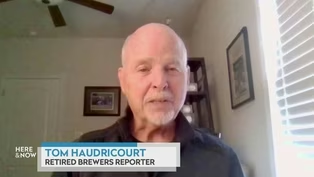
Tom Haudricourt on the Historic 2026 Season for the Brewers
Video has Closed Captions
Clip: S2500 Ep2518 | 5m 7s | Tom Haudricourt on the importance of the 2026 Brewers season as it won the World Series. (5m 7s)
 New
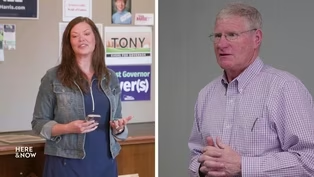
Who Will Hold Control of the Wisconsin Legislature in 2027?
Video has Closed Captions
Clip: S2500 Ep2518 | 4m 50s | Wisconsin's 17th Senate District race reflects a wider fight over the state Legislature. (4m 50s)
 New
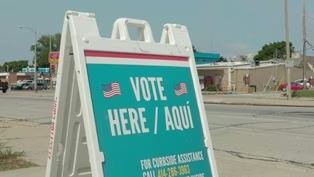
Who Will Wisconsin's Hispanic Voters Turn Out for in 2026?
Video has Closed Captions
Clip: S2500 Ep2518 | 10m 13s | Political parties believe the support of Hispanic voters is up for grabs once again. (10m 13s)
Providing Support for PBS.org
Learn Moreabout PBS online sponsorship New Episode
- News and Public Affairs

Top journalists deliver compelling original analysis of the hour's headlines.
 New Episode
- News and Public Affairs

Today's top journalists discuss Washington's current political events and public affairs.
 New Episode

 New Episode
 New Episode
 New Episode
 New Episode

 New Episode
 New Episode

 New Episode

Support for PBS provided by:
Here and Now is a local public television program presented by PBS Wisconsin